
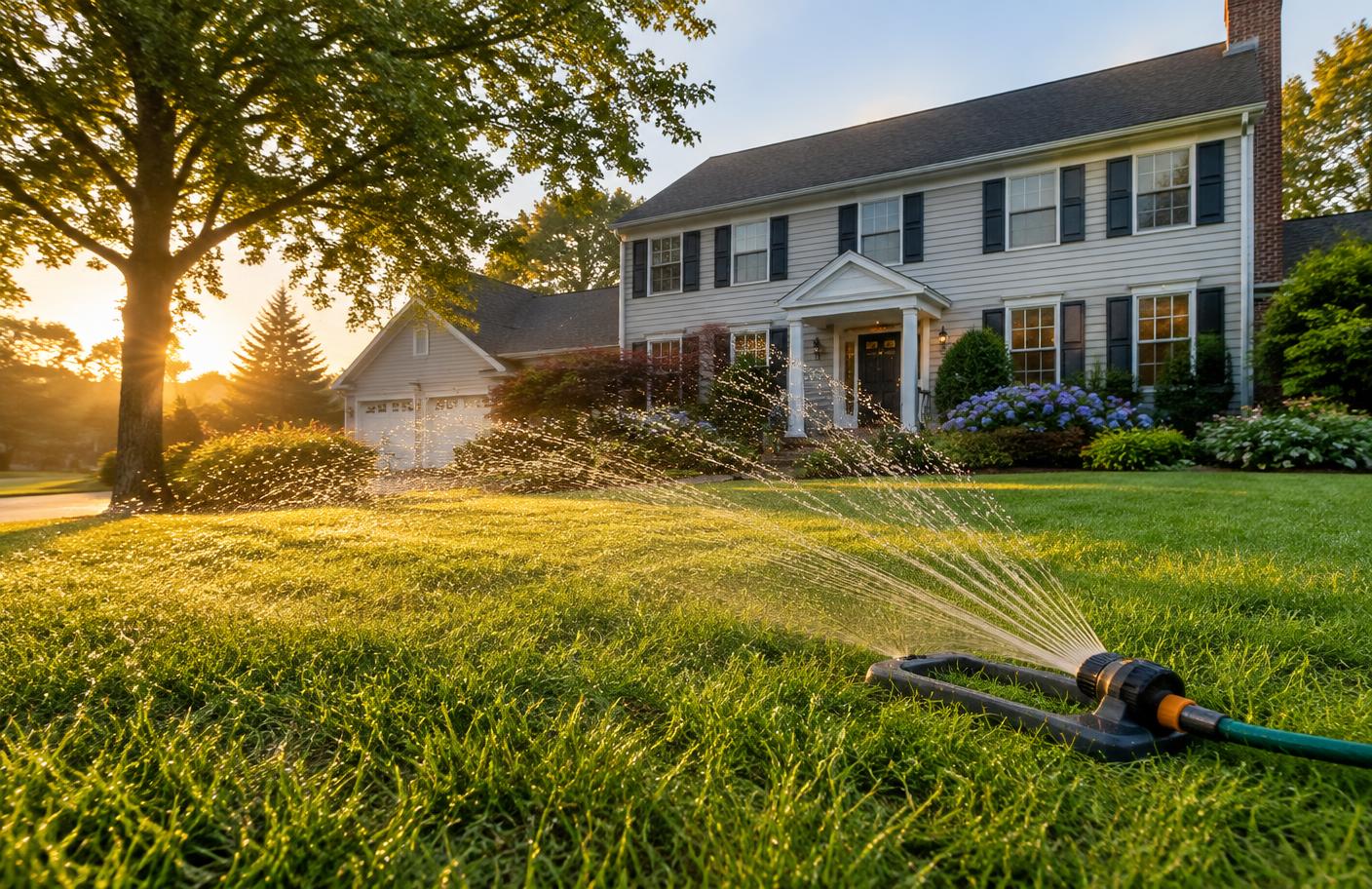
Watering & Mowing
Summer Lawn Watering Schedule for New Jersey
How much water your lawn really needs, the best time of day to run it, and how to set a simple summer watering schedule that builds deep roots instead of disease.
GreenStripe Lawn Advice
Reviewed by the GreenStripe Turf Team
Last updated:
On This Page
The Short Answer
About 1 Inch a Week, Early Morning, a Few Deep Waterings.
Most established New Jersey lawns need roughly 1 inch of water per week in summer, including rain. Deliver it in 2–3 deep waterings rather than a little every day, and run it between about 4 and 9 a.m. In heat waves, a lawn may need closer to 1¼–1½ inches. Count the rain, measure your sprinklers once, and adjust from there.
Water deep, not daily.
Deep, less frequent watering trains roots to grow down. Short daily cycles keep roots shallow and the surface wet, which invites disease.
~1 Inch / Week
Rain included; more in heat waves.
2–3 Times / Week
Deep soaks, not daily sprinkles.
4–9 a.m.
Less evaporation, dry by evening.
Measure Once
A can test sets your run times.
How Much Water Does a Lawn Need in Summer?
The goal is to wet the root zone, roughly the top 4–6 inches of soil, then let the surface dry a bit before the next watering. For most cool-season lawns that works out to about 1 inch per week. Sandy soils drain quickly and may need water in smaller, more frequent amounts; heavy clay soils hold water longer but absorb it slowly, so they do better with a cycle-and-soak approach (run, pause, run again) to avoid runoff.
Rain counts. A simple rain gauge tells you how much fell, so you can skip or shorten the next watering. Running sprinklers right after a storm is one of the most common sources of wasted water and fungus problems.
How Long Should You Run Your Sprinklers?
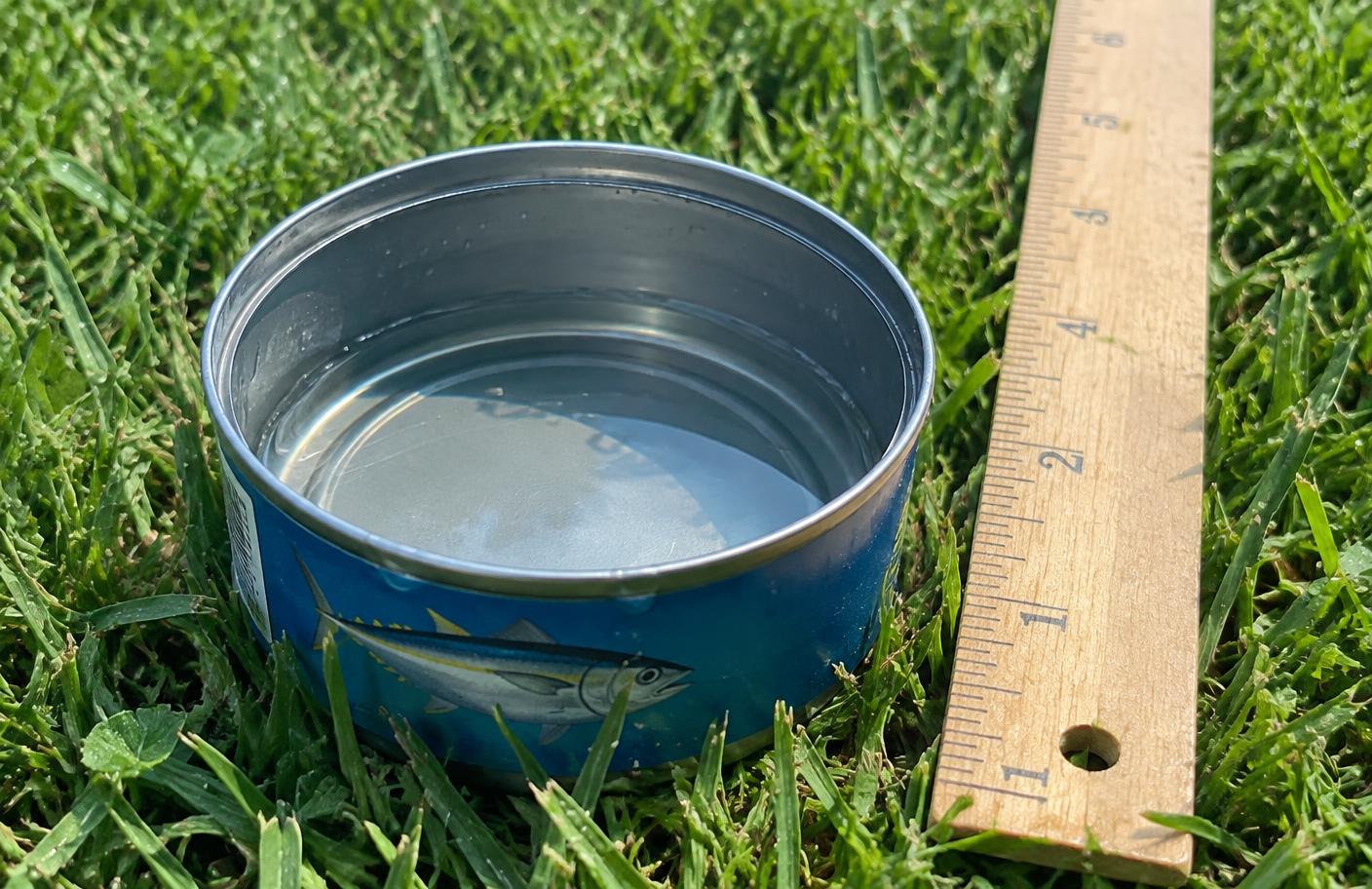
The Can Test
There's no universal number of minutes. Sprinkler output varies widely, so measure yours once.
- 1.
Set Out Cans
Place 4–6 empty tuna or cat-food cans around one zone or sprinkler area.
- 2.
Run for 15 Minutes
Run the zone exactly as you normally would.
- 3.
Measure the Depth
Average the water depth across the cans with a ruler.
- 4.
Do the Math
If 15 minutes gave ¼ inch, that zone needs about 60 minutes a week to reach 1 inch, split into 2–3 runs.
Uneven depths between cans mean uneven coverage. Adjust heads or add a sprinkler before you add minutes.
A Simple New Jersey Watering Schedule
Use these as starting points and adjust for rain, soil and sun.
April–May
Spring
Rain usually covers it. Water only when the lawn shows stress or there's been no rain for 7–10 days. Watering too early encourages shallow roots.
June
Early Summer
About 1 inch per week, in 2 deep waterings, as rain allows.
July–August
Peak Summer
About 1–1½ inches per week, in 2–3 deep waterings. Full-sun areas and slopes may need extra.
September
Late Summer / Fall
Taper back toward 1 inch as nights cool. Newly seeded areas follow a separate light, frequent schedule.
October
Fall
Water only in dry spells. Winterize irrigation systems before the first hard freeze.
What Is the Best Time of Day to Water?
Early morning, roughly 4–9 a.m., is best. Winds are calmer, less water is lost to evaporation, and the grass dries as the sun comes up. Evening watering leaves the lawn wet overnight, which is exactly what diseases like brown patch and dollar spot need. Midday watering isn't harmful to the grass, but a lot of it evaporates before it soaks in.
Many New Jersey towns and water utilities set odd/even-day or time-of-day watering restrictions in summer. Check your local rules and set your timer to match.
Signs Your Lawn Needs More or Less Water
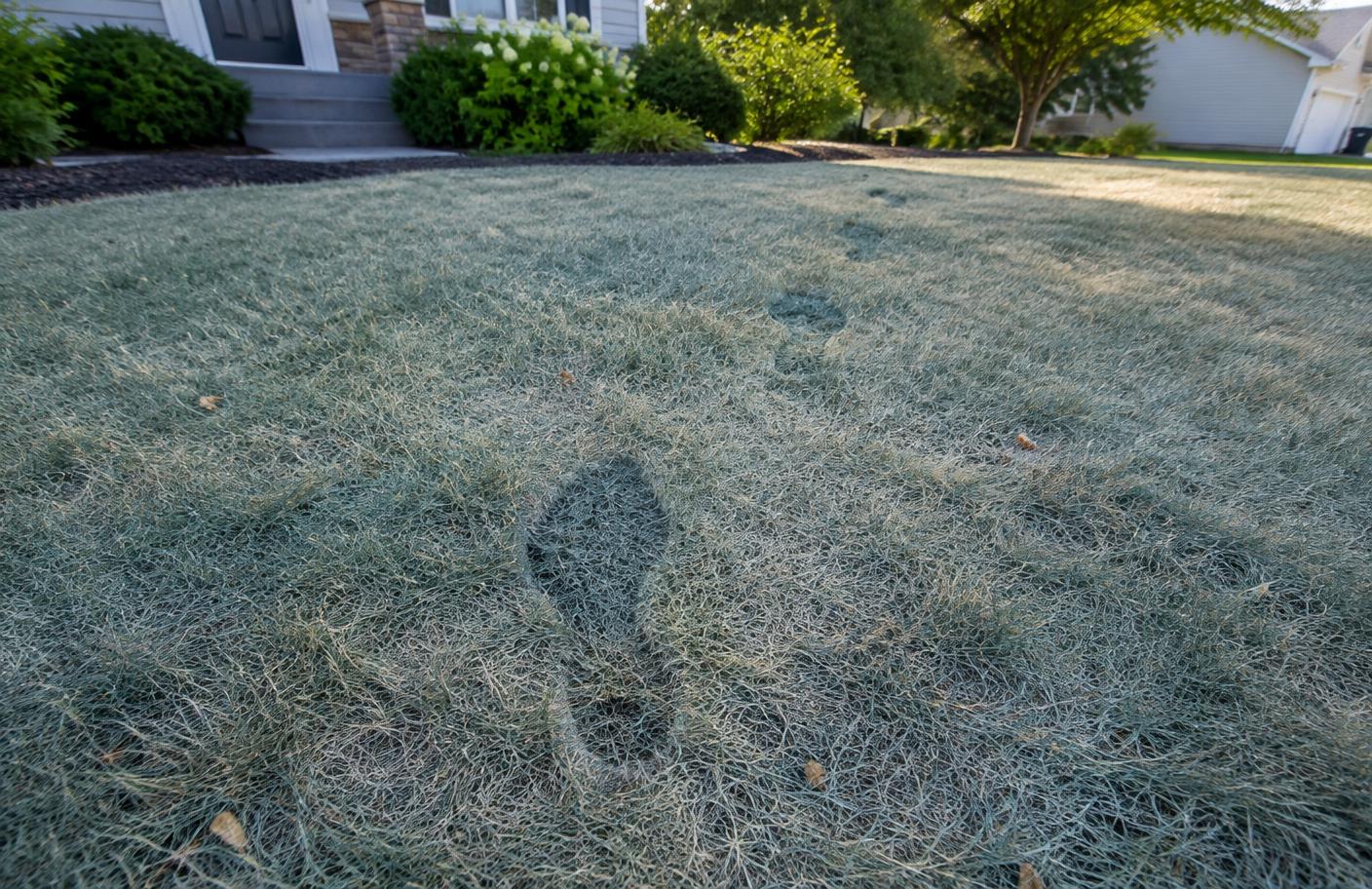
What to Look For
Underwatered
Footprints stay pressed in, blades fold or curl, and the lawn turns a dull bluish-gray before browning.
Overwatered
Soft or squishy ground, mushrooms, shallow roots, more crabgrass and nutsedge, and frequent fungus. See Lawn Fungus.
Uneven Coverage
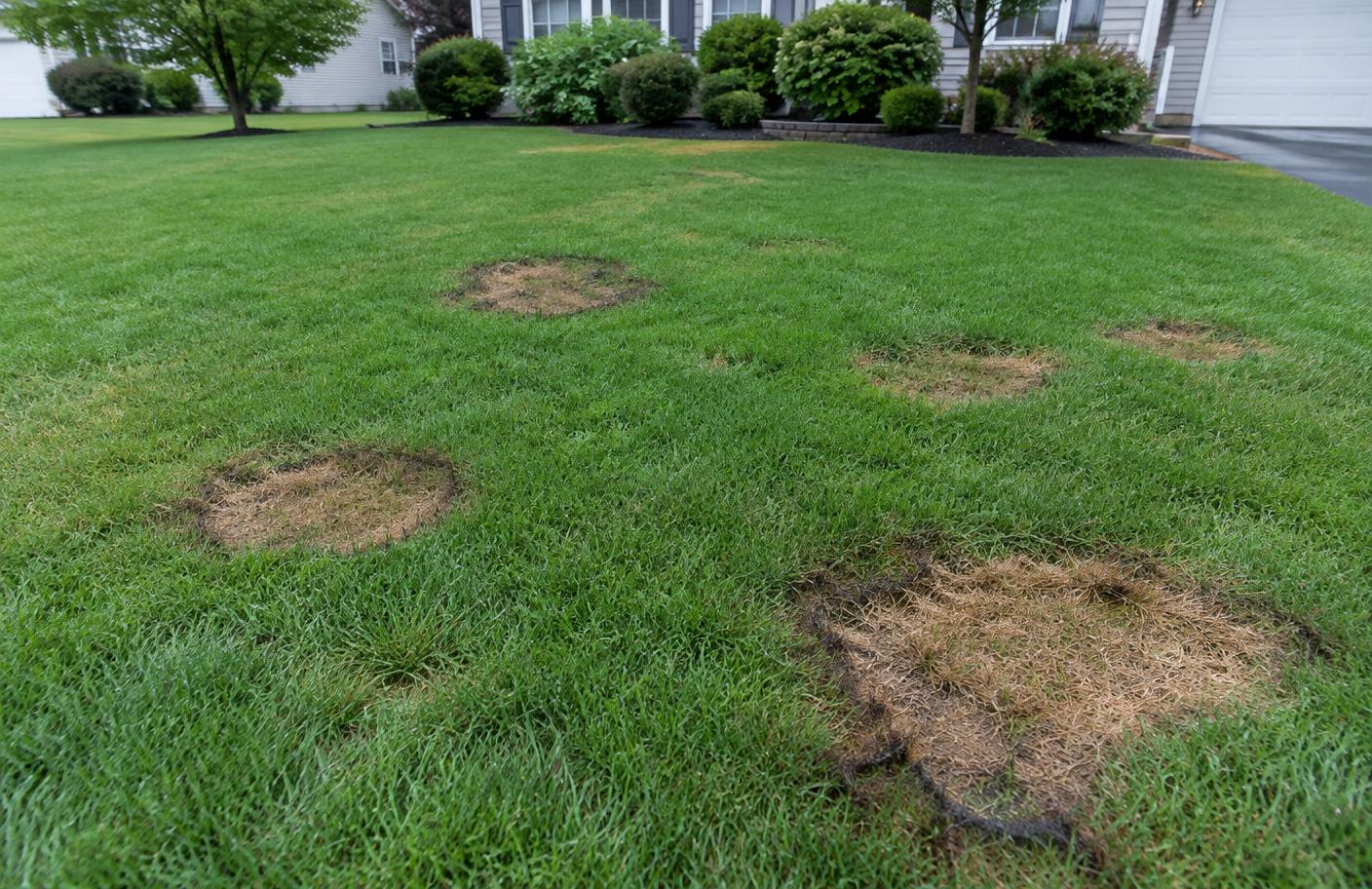
Dry crescents or brown spots in the same places every summer usually mean sprinkler coverage gaps, not a lawn problem.
Can You Let Your Lawn Go Dormant?
Cool-season grasses can go dormant in a long dry spell, turning brown to protect the crown. A healthy, established lawn usually survives several weeks of dormancy and greens up when rain returns. If you choose dormancy, give it about ½ inch of water every 2–3 weeks to keep the crowns alive, and keep foot traffic off. Don't switch back and forth between watering and dormancy, which stresses the lawn more than either choice.
Not every brown lawn is thirsty, though. Grubs, chinch bugs and disease can look like drought. If watering doesn't help, see Why Is My Lawn Turning Brown?.
Related Services
Local Lawn Care in Northern New Jersey
Keep Learning
Lawn Watering Questions
How long should I water my lawn in summer?
Long enough to deliver about 1 inch per week, rain included, in 2–3 waterings. The minutes depend on your sprinklers; a can test tells you how long it takes to put down ¼ or ½ inch.
How often should I water my lawn in New Jersey?
For most established lawns, 2–3 times per week in summer is better than daily. Sandy soils may need slightly more frequent, shorter waterings.
What is the best time to water grass?
Early morning, roughly 4–9 a.m. Less water evaporates, and the grass dries during the day, which lowers disease risk.
Is it bad to water grass at night?
It isn't harmful to the grass directly, but leaving the lawn wet overnight creates ideal conditions for fungal diseases like brown patch and dollar spot.
Should I water every day when it's hot?
Usually not. Daily light watering keeps roots shallow. In heat waves, increase the total to about 1¼–1½ inches per week, still in deep waterings.
Does rain count toward watering?
Yes. Use a rain gauge and subtract rainfall from your weekly target. Skip watering after a soaking rain.
Can I water my lawn in the afternoon?
You can, and it won't burn the grass, but more water evaporates. Morning is more efficient.
Should I water a dormant brown lawn?
Either keep watering consistently or let it stay dormant. If dormant, give about ½ inch every 2–3 weeks to keep the crowns alive until rain returns.
How do I know if I'm overwatering?
Soggy soil, mushrooms, frequent fungus, shallow roots and more weeds like nutsedge are common signs. Push a screwdriver into the soil: if it slides in easily the day after watering, you can likely cut back.
Sources & further reading
- Rutgers NJAES — Water Conservation and Lawn Irrigation
- Penn State Extension — Watering Lawns
- UMass Extension — Turf Irrigation Best Management Practices