
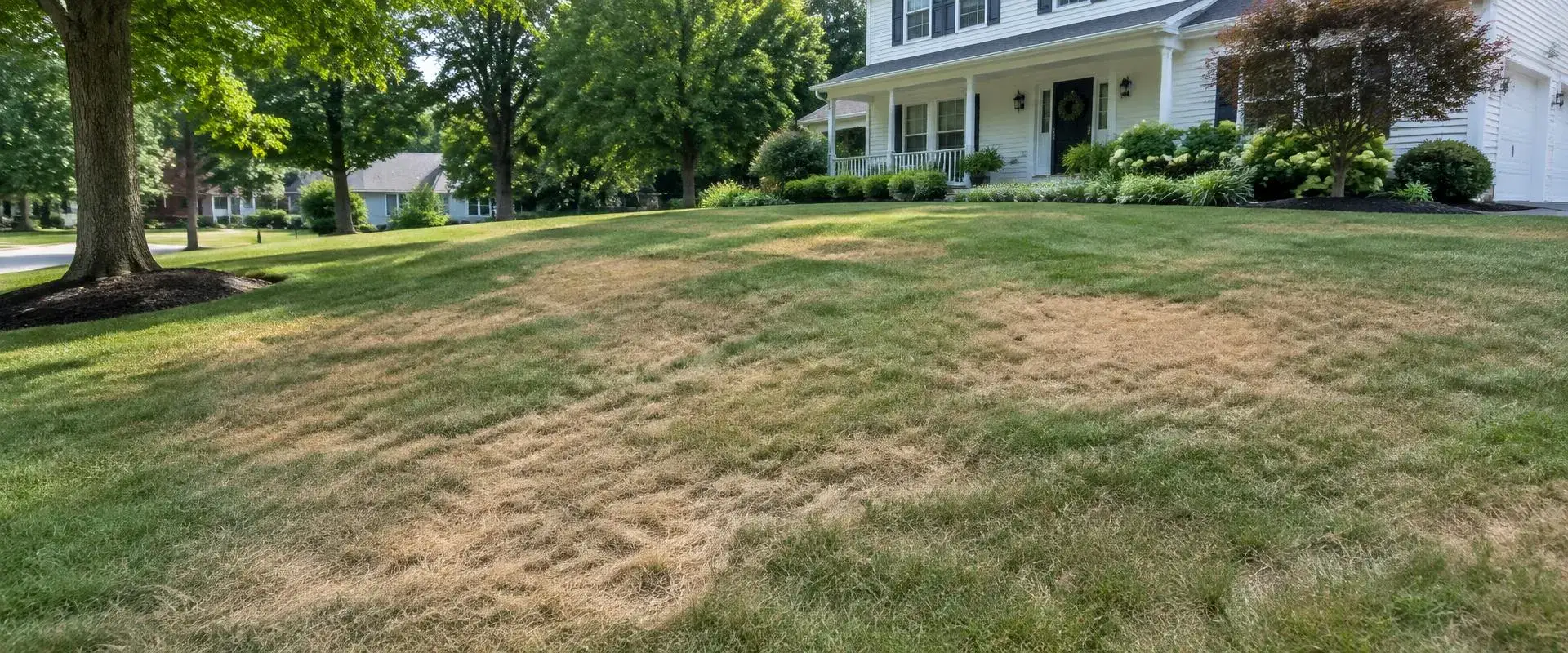
Lawn Problems & Diagnosis
Why Is My Lawn Turning Brown?
Brown grass can be caused by heat and drought—but it can also point to disease, insects, mowing stress, poor soil conditions or another underlying problem. Here's how to start narrowing down what's happening in your lawn.
GreenStripe Lawn Advice
Reviewed by the GreenStripe Turf Team
Last updated:
On This Page
The Short Answer
Brown grass is a symptom—not a diagnosis.
In Northern New Jersey, browning can come from drought and heat stress, disease, insects, mowing damage, compacted or poor soil, irrigation problems, pet damage or natural seasonal dormancy. The pattern, timing and condition of the grass usually provide clues about what's happening.
Before treating anything, identify the cause.
The pattern, conditions and symptoms will point you toward the right decision.
What Does the Brown Area Look Like?
Start with the pattern. Where the damage appears—and what it looks like up close—can tell you a lot.
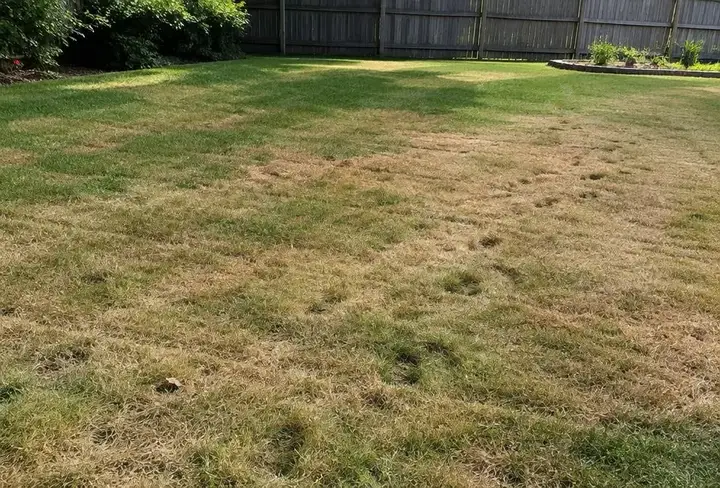
Large areas fading from green to gray or brown
Possible cause: Heat or drought stress
- Grass losing its upright appearance
- A gray-green or bluish cast before browning
- Footprints staying visible after walking across the lawn
- Sunny areas drying out before shaded areas
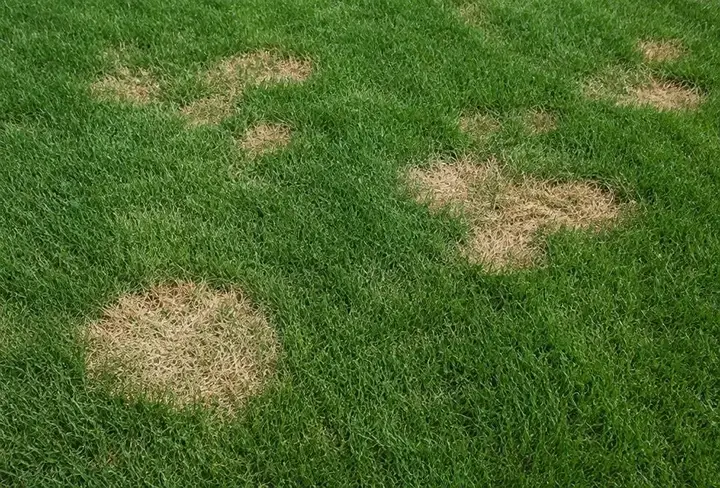
Circular or irregular patches
Possible cause: Turf disease (not always)
- Defined patches or rings
- Lesions on individual grass blades
- Damage expanding during warm, humid or persistently wet weather
- Similar patterns returning under similar conditions
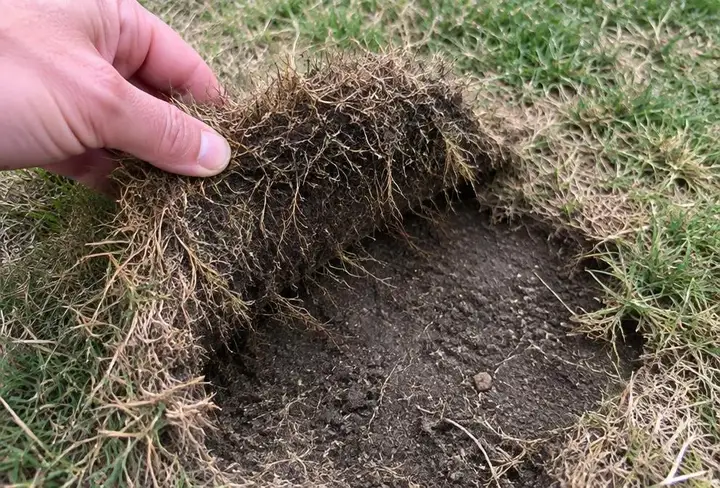
Turf that pulls up unusually easily
Possible cause: Root damage, possibly grub activity
- A weak or damaged root system
- Turf separating from the soil more easily than healthy turf
- Animals digging in the lawn, which sometimes accompanies grubs
- Browning alone isn't enough to confirm grubs
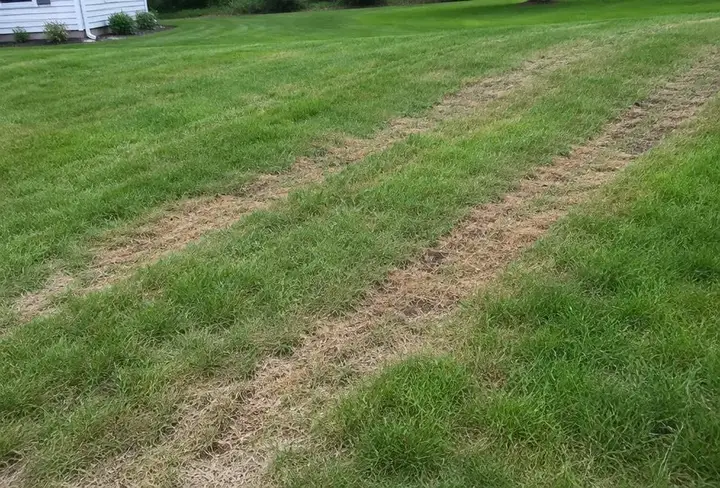
Brown stripes or scalped areas after mowing
Possible cause: Mowing stress
- Damage following mower patterns
- Turf cut unusually short
- Browning after removing too much leaf at once
- Uneven or scalped high spots
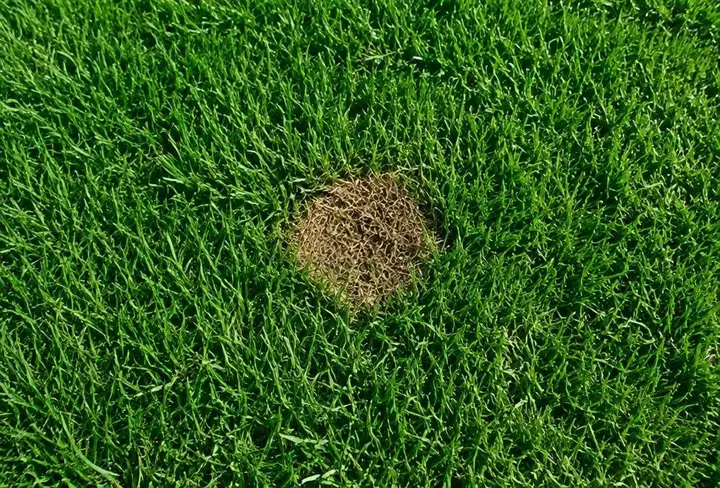
One isolated patch in an otherwise healthy lawn
Possible causes: Irrigation miss, pet urine, a spill or injury, compaction or another site-specific issue
- One distinct area surrounded by healthy turf
- Check sprinkler coverage in that spot
- Consider pets, spills or recent activity
- Inspect before treating
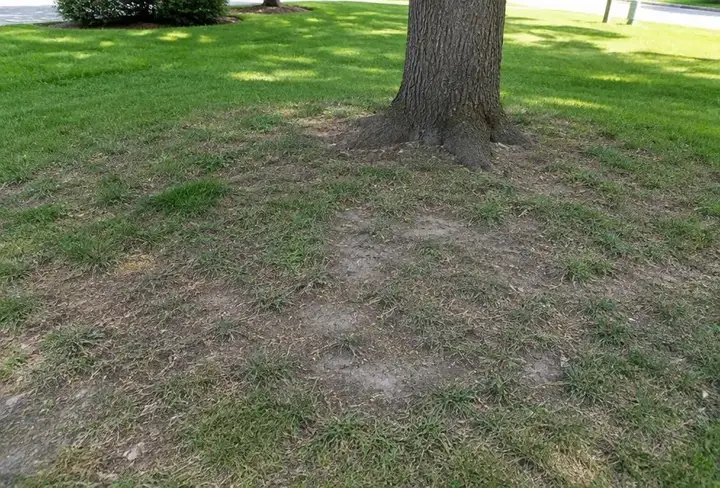
Thin brown turf that struggles in the same place
Possible causes: Soil, drainage, shade, compaction or other site conditions
- The same area fails season after season
- Often tied to soil, drainage or shade
- Re-treating the grass alone rarely fixes it
- The underlying environment needs attention
7 Common Reasons New Jersey Lawns Turn Brown
Each of these can turn grass brown. Understanding the differences helps you choose the right next step.
1.Heat and Drought Stress
Northern New Jersey lawns are cool-season turf—mostly tall fescue, Kentucky bluegrass and perennial ryegrass. During hot, dry stretches they slow down, wilt and can eventually go dormant.
Browning from heat and drought does not automatically mean the grass is dead. Established lawns most often need supplemental water in June, July and August, but how much depends on rainfall, soil, sun exposure and how your irrigation actually performs. There's no single watering schedule that fits every property.
“Footprints that linger and turf taking on a grayish or blue-purple tint are among the earliest signs a lawn is short on moisture.”
2.Lawn Disease
Warm, humid periods—common across New Jersey summers—can favor several turf diseases. Depending on the disease and grass type, symptoms can show up as spots, irregular patches, rings, thinning or lesions on individual blades.
Drought, insects and cultural stress can all look like disease, so a pattern or photo alone isn't a reliable diagnosis.
- Brown patch — particularly relevant to tall fescue during hot, humid weather.
- Dollar spot — small straw-colored spots that can merge into larger areas when conditions favor the disease.
- Red thread — discolored patches, sometimes with visible reddish or pink fungal threads.
Not every brown patch needs a fungicide. Proper diagnosis comes first.
3.Grubs and Other Turf-Feeding Insects
Insects can damage turf, but brown grass on its own doesn't prove an insect problem. White grubs feed on roots, which weakens the turf above them and can make it easier to pull up.
Before deciding insects are responsible, a professional looks at the turf and roots, whether pests are actually present and in what numbers, the time of year and the damage pattern. Finding a single grub doesn't mean treatment is needed.
4.Mowing Too Short
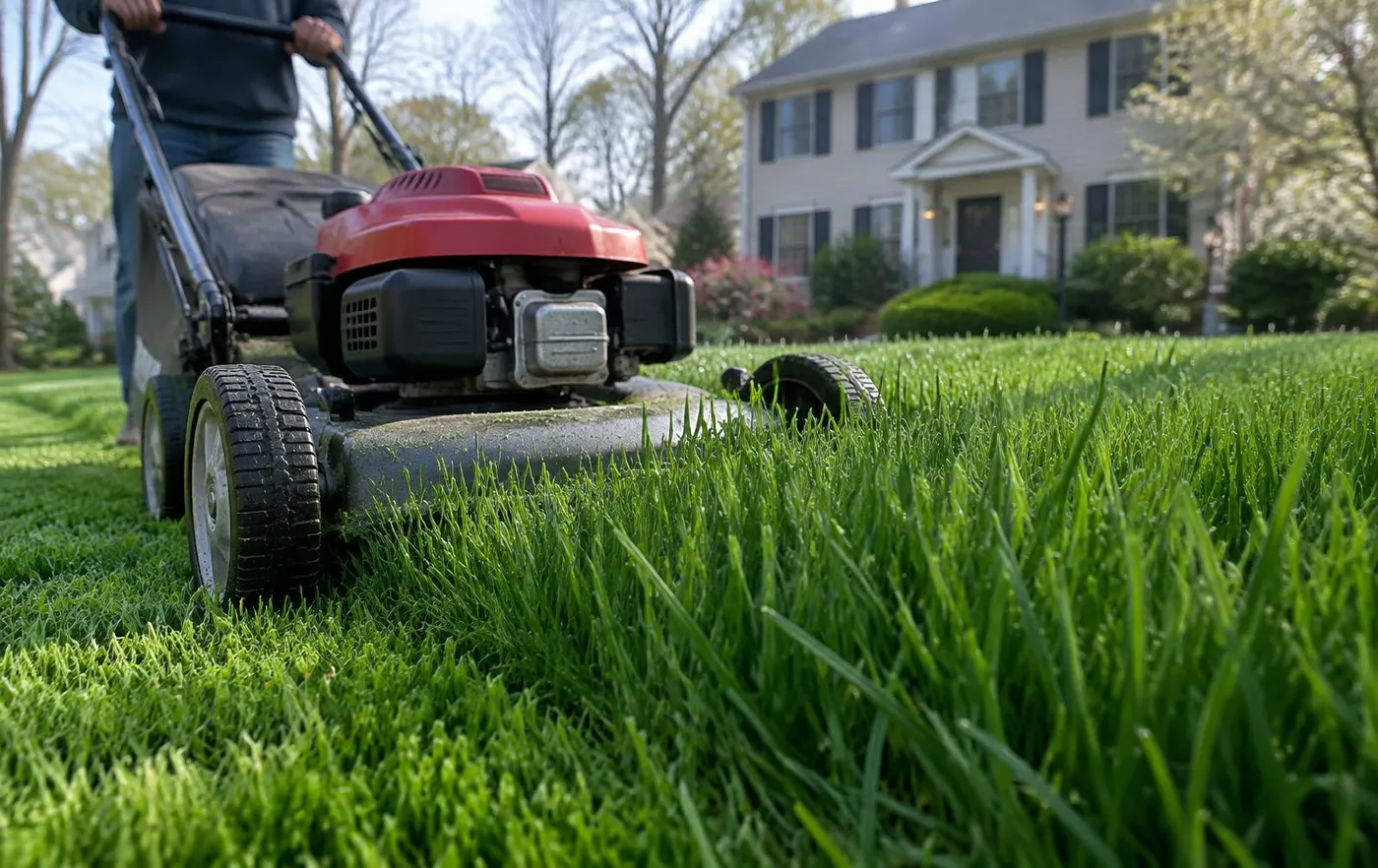
Repeatedly cutting cool-season grass too low adds stress. For most New Jersey lawns, a mowing height of roughly 2½ to 3 inches is a good target; mowing below 2 inches reduces the turf's ability to handle heat and drought and can leave it more vulnerable to other problems.
We generally want homeowners to keep plenty of leaf on the plant rather than scalp the lawn—especially heading into summer.
The one-third rule: avoid removing more than about one-third of the grass blade in a single mowing.
5.Irrigation Problems
A lawn can have an irrigation system and still suffer moisture stress. Common reasons include:
- Poor sprinkler coverage or overlap
- Blocked, broken or misaligned heads
- Zones that don't account for different sun exposure
- Slopes where water runs off
- Compacted soil or soil that doesn't accept or hold water well
Too much water causes its own problems—from shallow roots to conditions that favor disease. More water isn't automatically the answer.
6.Soil, Compaction and Drainage
Sometimes struggling turf is really a soil problem showing up in the grass. Compaction, poor drainage, shallow or disturbed soil, pH that's off, nutrient imbalances or a poor rooting environment can all keep grass from thriving.
This is especially common on new-construction and heavily disturbed properties. A soil test is often the clearest starting point, and properties built on disturbed soil may benefit from New Build Soil Regeneration.
7.Natural Dormancy and Seasonal Stress
Cool-season grass can lose color or go dormant during extended summer stress as a survival response. Brown doesn't necessarily mean dead.
Whether dormant turf recovers depends on the grass type, how severe and how long the stress lasts, and the site conditions—so recovery isn't guaranteed.
Before You Treat the Brown Spot, Ask These Questions
When did it appear?
After extreme heat? Heavy rain? Mowing? A treatment?
What shape is it?
Uniform fading? Small spots? Large circles? Stripes? One isolated area?
Is the soil dry or saturated?
Does the turf pull away from the soil easily?
Are there lesions or discoloration on individual grass blades?
Does the same area struggle every year?
Is the problem spreading?
Those clues are often more useful than the color brown itself.
When Should You Have the Lawn Looked At?
A little summer stress isn't automatically an emergency. But it makes sense to investigate when:
- Browning is spreading quickly
- The same area repeatedly fails
- Turf is thinning or dying rather than simply losing color
- You suspect insects or disease
- Irrigation changes aren't solving the problem
- You're unsure whether the lawn is dormant or actually damaged
The goal isn't to throw another product at the lawn. It's to understand why the turf is struggling first.
Related Services
Local Lawn Care in Northern New Jersey
Keep Learning
Frequently Asked Questions
Does brown grass mean my lawn is dead?
No. Cool-season turf can lose color or become dormant during periods of heat or drought. Disease, insects and other stresses can also cause browning, so the cause needs to be identified before determining whether the turf is dead or likely to recover.
Should I water my lawn as soon as it turns brown?
Not automatically. Check soil moisture and the pattern of the damage first. Moisture stress is common, but disease, insects, poor irrigation coverage and other problems can also cause brown turf.
Can too much water make a lawn brown?
Yes. Excessively wet conditions can stress roots, reduce soil oxygen and contribute to conditions favorable to certain turf diseases. The goal is appropriate moisture—not simply more water.
Can mowing cause brown grass?
Yes. Mowing too low, removing too much of the blade at once or scalping uneven areas can increase turf stress and result in discoloration.
How can I tell if brown grass is caused by disease?
Pattern, weather conditions and symptoms on individual grass blades can provide clues, but several lawn problems can look similar. Proper diagnosis is preferable to treating based only on color or a photograph.
Sources & further reading
- Rutgers NJAES — Best Management Practices for Watering Lawns
- Rutgers NJAES — Turfgrass disease diagnostic resources
- Rutgers NJAES — Lawn mowing and renovation guidance
- Rutgers NJAES — Integrated pest management for turfgrass