
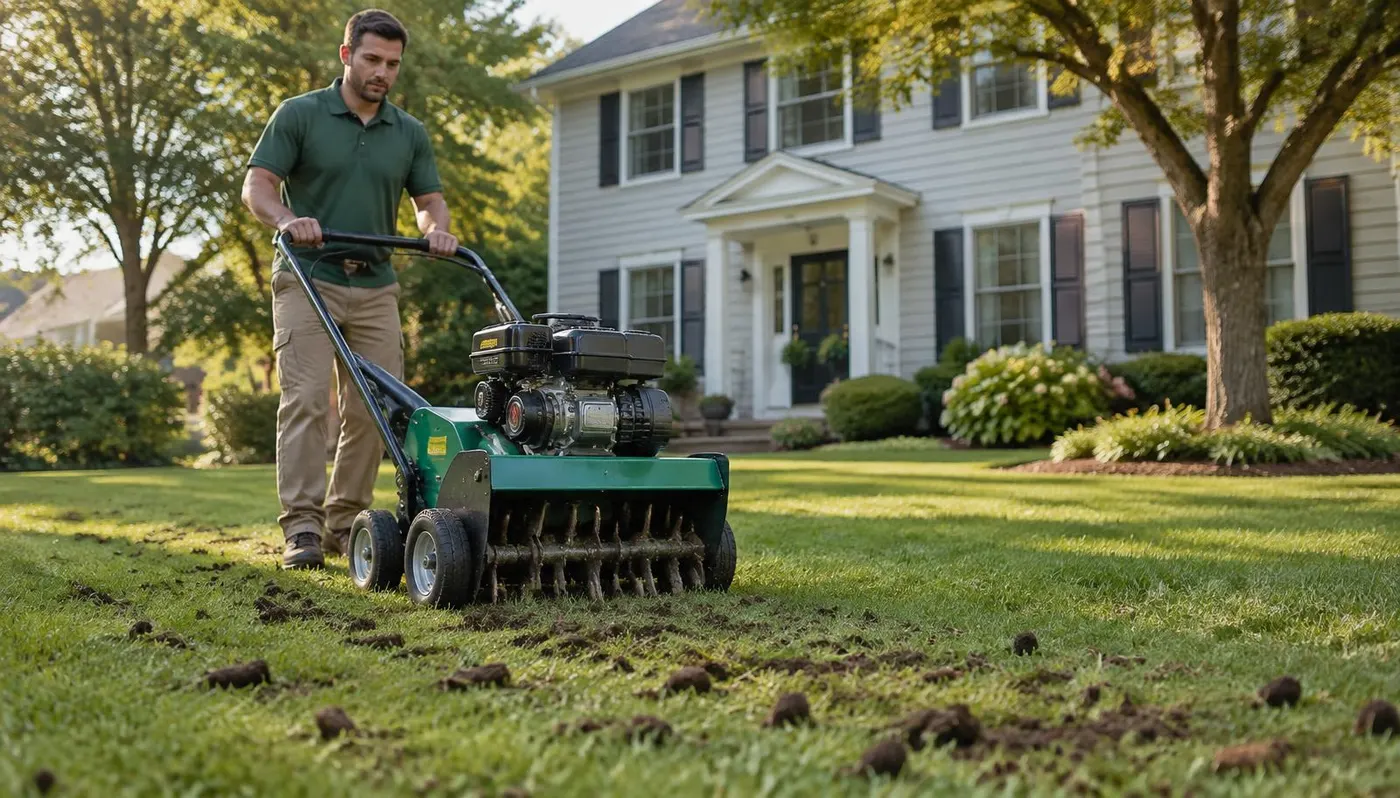
Aeration & Seeding
Best Time to Aerate & Overseed Your Lawn in New Jersey
For most established lawns in Northern New Jersey, fall is the best time to core aerate and overseed. Cooler temperatures, warm soil and reduced summer stress create a much better environment for cool-season grass establishment before winter.
GreenStripe Lawn Advice
Reviewed by the GreenStripe Turf Team
Last updated:
On This Page
The Short Answer
For Most New Jersey Lawns, Fall Wins.
Late summer into early fall generally provides the best combination of warm soil, cooler air temperatures and establishment time for the cool-season grasses commonly grown in Northern New Jersey. Spring can grow grass, but establishing new turf shortly before summer creates additional challenges. That's why GreenStripe typically reserves aeration and overseeding for the fall rather than automatically selling the service twice a year.
Fall: the preferred establishment window.
Spring: possible, but usually not our recommendation.
Why Fall Is the Best Time to Aerate & Overseed in New Jersey
Northern New Jersey lawns are predominantly cool-season turf—tall fescue, Kentucky bluegrass and perennial ryegrass. These grasses do their best growing when temperatures are moderate, and late summer into fall lines up several advantages at once:
- Soil remains warm enough for germination
- Air temperatures begin moderating
- Summer heat stress declines
- Young turf has time to establish before the following summer
- Pressure from many summer annual weeds begins declining
- Existing cool-season turf begins actively recovering
The cool-season renovation calendar
Spring
Short runway
Summer
Heat & drought stress
Late Summer
Warm soil, cooling air
Fall
Active turf growth
Winter
Dormant
Exact germination and establishment timing varies with weather, turf species, irrigation and site conditions—so no one can promise a specific date. What fall offers is the best overall opportunity.
When Should You Aerate & Overseed in Northern New Jersey?
GreenStripe generally targets the late-summer through fall establishment period rather than relying on one universal calendar date. The right timing for a specific lawn depends on weather, soil temperature, turf condition, irrigation availability, grass species and how much repair is needed.
Within that window, earlier generally gives new seedlings more time to develop before colder weather arrives.
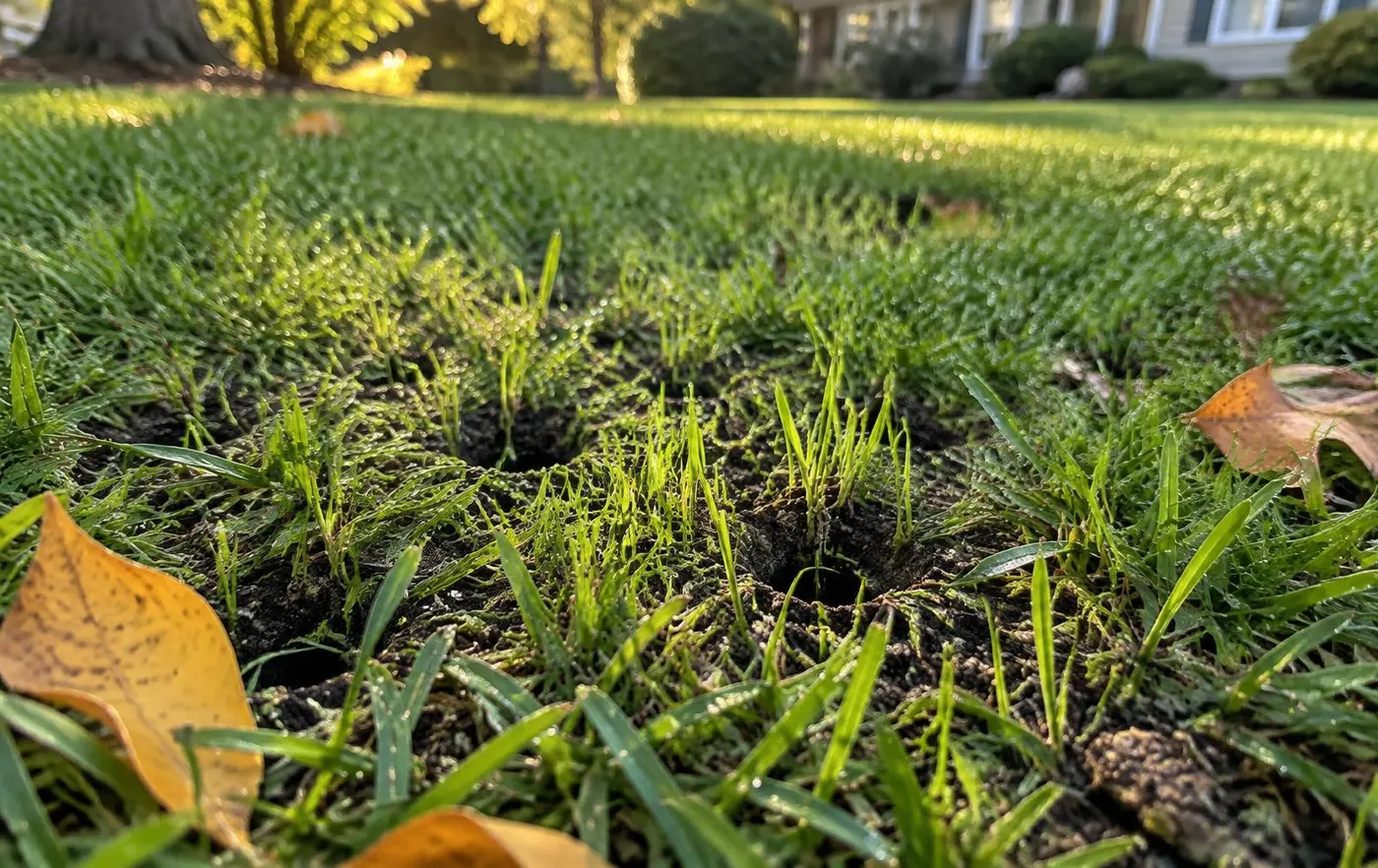
What About Aerating & Overseeding in Spring?
You can grow grass in spring. That doesn't automatically make spring aeration and overseeding a good investment for an established lawn.
Why GreenStripe Usually Doesn't Recommend It
- 1.
A shorter runway before summer. Young turf established in spring has less time to develop a mature root system before heat and drought stress arrive.
- 2.
Crabgrass prevention can conflict with seeding. Many conventional pre-emergent crabgrass-control strategies can interfere with desirable grass-seed establishment. Product labels and active ingredients vary, so always follow the specific product label.
- 3.
Increasing weed competition. Spring transitions into a period of increasing annual weed pressure.
- 4.
Summer stress arrives next. New seedlings may be asked to survive heat, drought, disease pressure and irrigation challenges relatively soon after establishment.
- 5.
Investment vs. outcome. Our objective isn't to sell an aeration simply because it can be performed. We'd rather recommend the timing that gives the renovation a better opportunity to succeed.
Spring
Less favorable for routine renovation
- Short runway before summer
- Potential pre-emergent conflicts
- Increasing weed pressure
- Young turf enters summer quickly
Fall
GreenStripe's preferred window
- Warm soil
- Moderating temperatures
- Active cool-season turf growth
- Longer establishment before next summer
What Core Aeration Actually Does
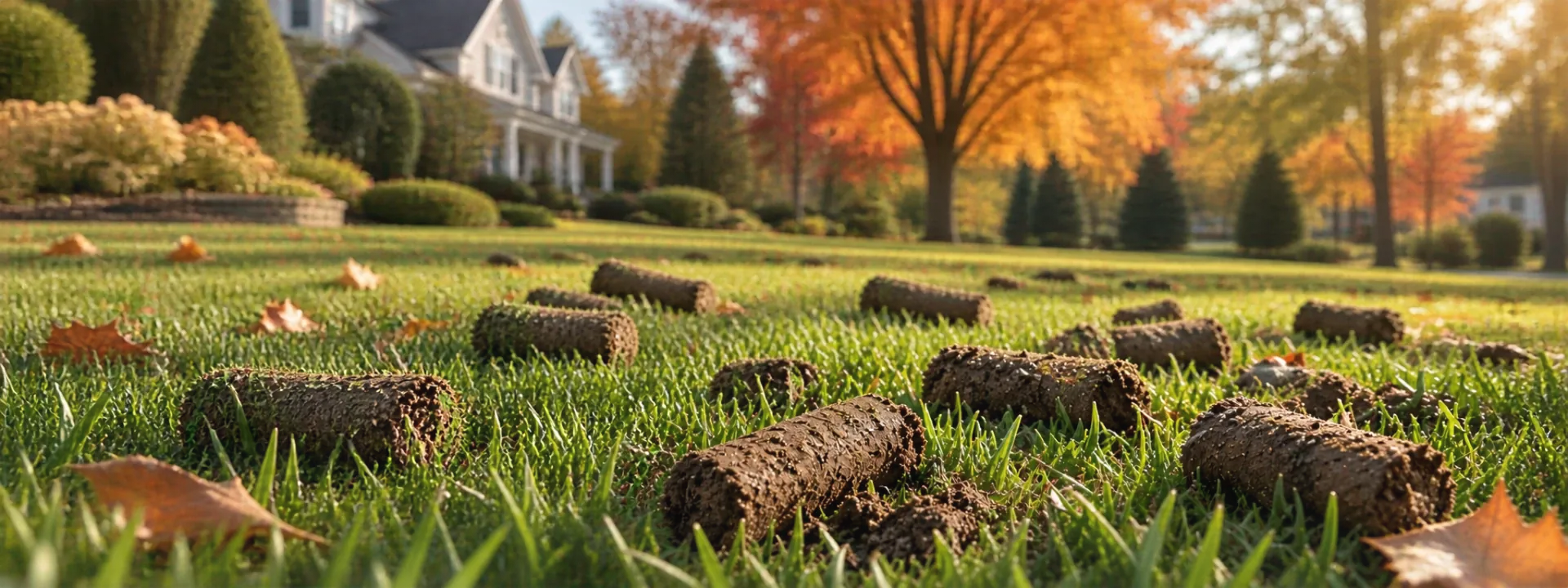
Core aeration physically removes small plugs of soil from the turf and leaves them on the surface to break down. Its potential benefits include:
- Relieving some soil compaction
- Improving air and water movement into the root zone
- Creating openings for root development
- Improving seed-to-soil opportunity when paired with overseeding
- Helping manage excessive thatch as part of an overall turf-management program
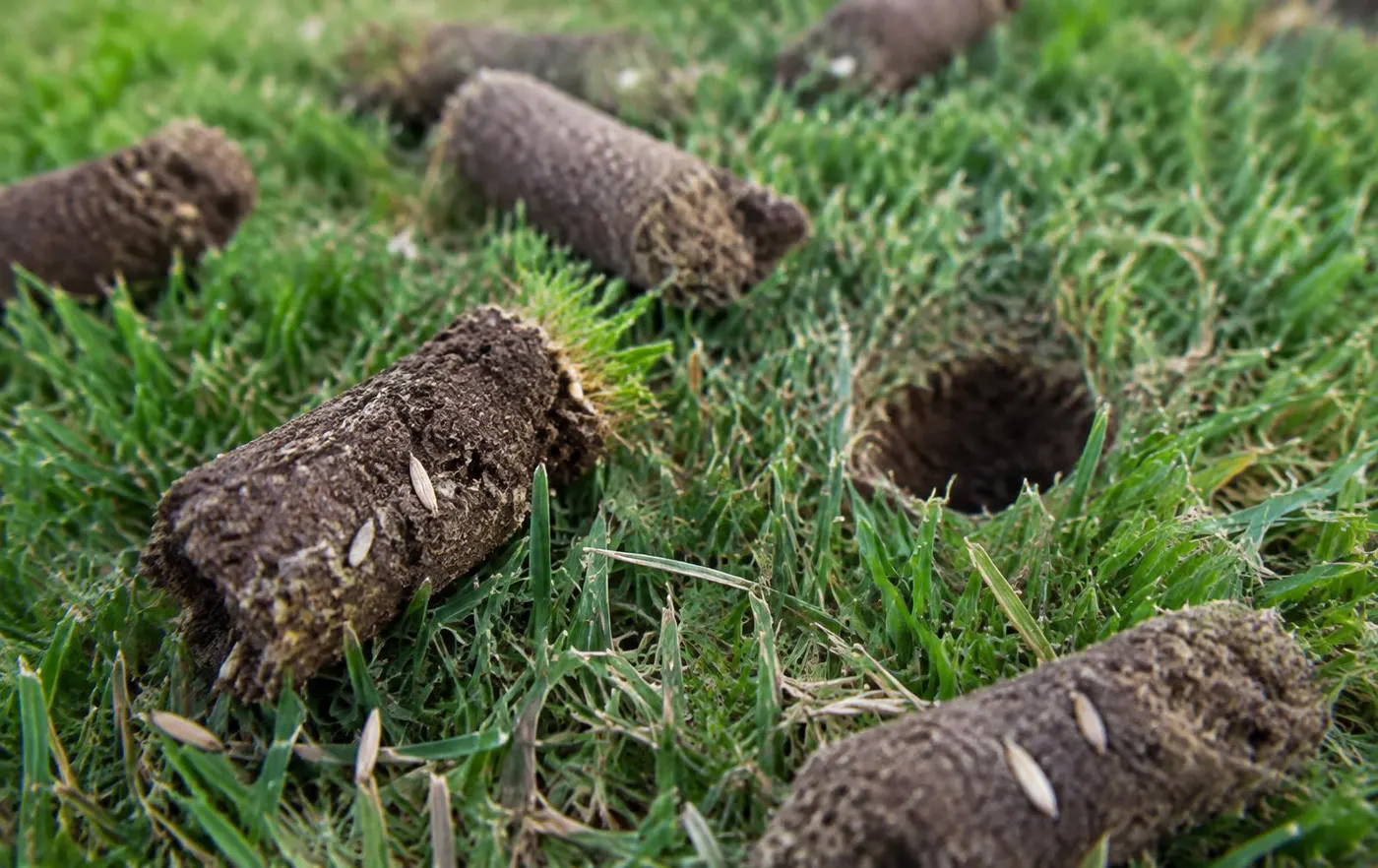
Core aeration isn't dethatching, and it isn't a permanent fix for severely compacted or structurally poor soil. It's one useful tool—most valuable when it's paired with the right timing and the right follow-up. Here's what to do after aerating your lawn.
Why pair aeration with overseeding?
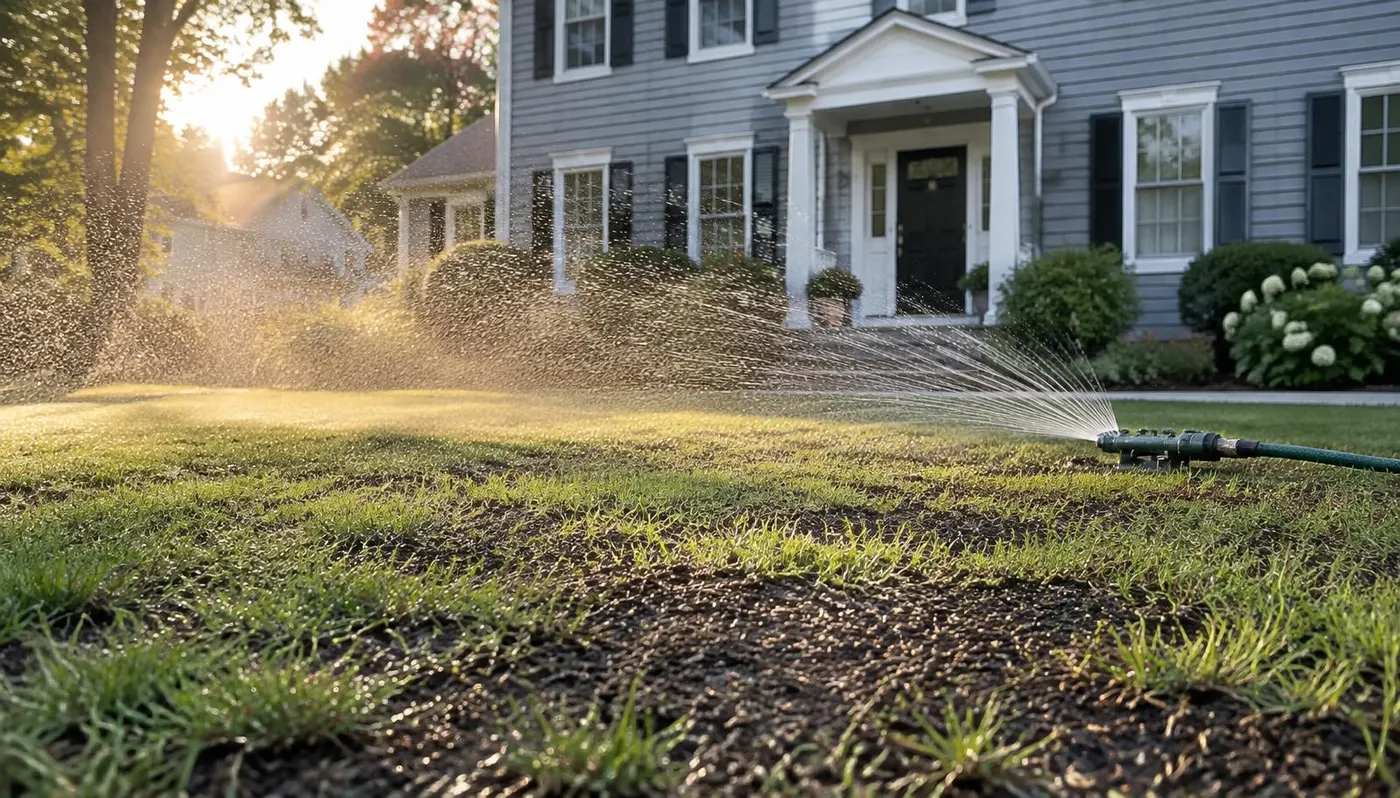
The objective isn't simply more grass seed—it's more desirable turf density. Thin turf leaves more opportunity for weeds, crabgrass, heat stress, erosion and continued decline. Aeration creates openings and better seed-to-soil contact opportunities, while overseeding introduces desirable grass into weak areas. Not every seed lands in an aeration hole, and holes alone don't guarantee germination—establishment still depends on watering, weather and care afterward.
Look Beneath the Thin Turf
Why Does This Lawn Need Aeration in the First Place?
A thin lawn is the visible symptom. The more important question is why the turf became thin.
Soil Compaction
Heavy traffic, construction activity and certain soil conditions can limit pore space and root development.
Poor Soil Structure
Some lawns—especially construction-disturbed properties—may have shallow topsoil, dense subsoil or other physical limitations.
Water Movement
Areas that stay excessively wet or dry may have irrigation, grading, drainage or soil issues that aeration alone won't solve.
Heat & Drought Damage
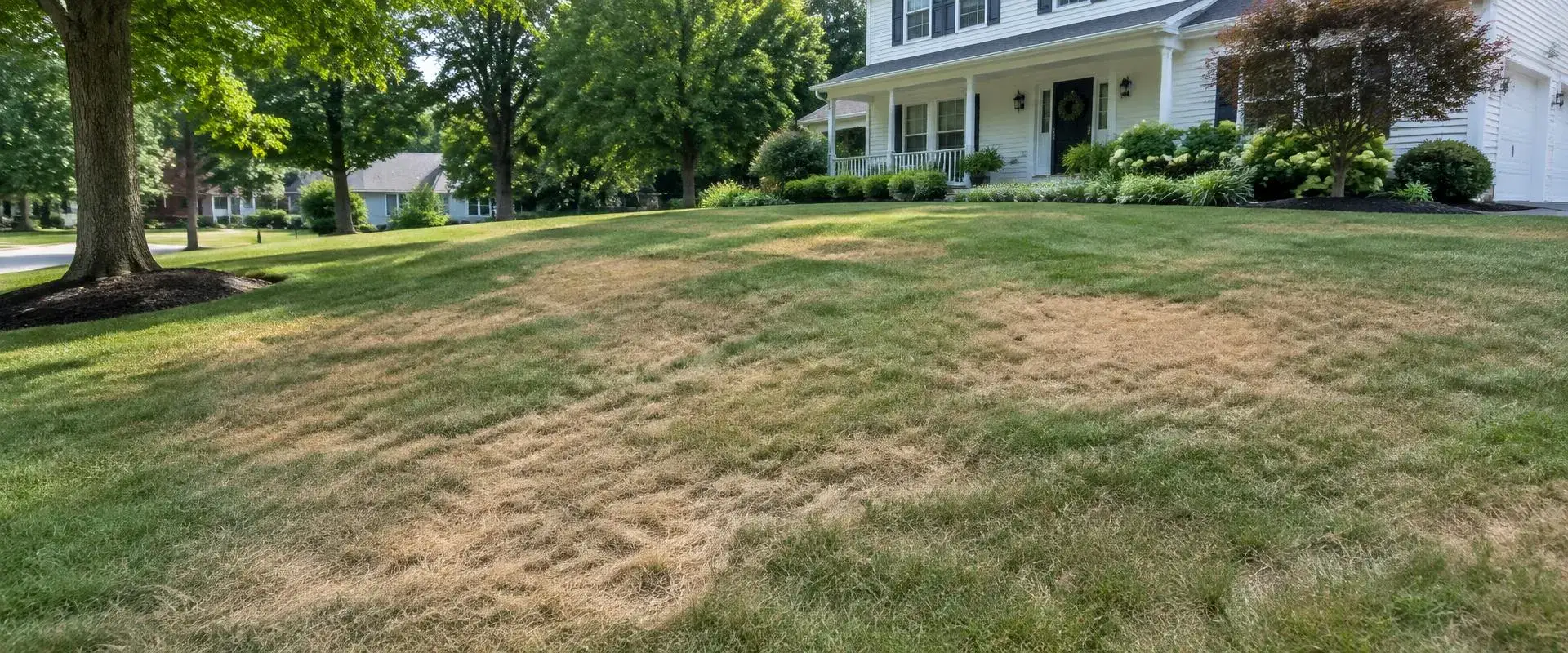
Summer stress leaves openings worth repairing—but rebuilding turf without addressing watering and stress may repeat the problem.
Disease or Insect Damage
Seeding repairs the damage, but doesn't necessarily address what caused the turf to disappear.
Shade
Repeatedly seeding into an environment with insufficient light may produce disappointing long-term results.
Mowing & Traffic
Scalping, consistently low mowing or concentrated foot and pet traffic can contribute to thinning.
Construction-Disturbed Soil
Newer properties can have serious soil limitations below the visible lawn. Aeration may help, but some need a more comprehensive soil-building approach.
Don't just ask, “Should I seed this?”Ask, “Why did the grass disappear?”
Sometimes the Lawn Needs More Than Aeration.
Repeated annual aeration and seeding shouldn't be a substitute for diagnosing persistent site problems. If the same areas keep failing, it's worth looking at soil condition, drainage, irrigation, sunlight, compaction, nutrient availability, organic matter, disease and insect history, and turf selection.
Severely depleted or construction-disturbed soils may benefit from compost topdressing as part of a more comprehensive strategy—the approach behind our Signature Lawn Renovation and New Build Soil Regeneration. A soil test is often the right first step.
Healthy / mostly dense
Maintain. Aeration may be considered based on conditions.
Thin / compacted
Core aeration + overseeding may be appropriate—ideally in fall.
Poor or disturbed soil
Evaluate a more comprehensive soil renovation or compost topdressing.
Drainage / grading issue
Aeration isn't the complete solution. Evaluate drainage and grading separately.
If You're Looking to Improve the Lawn in Spring, Consider the Soil First.
Rather than automatically aerating and overseeding an established lawn in spring, there are situations where applying quality compost as a topdressing is a better soil-focused investment. Compost can contribute organic material and support soil-building efforts without asking the homeowner to establish a whole new stand of seedlings right before summer.
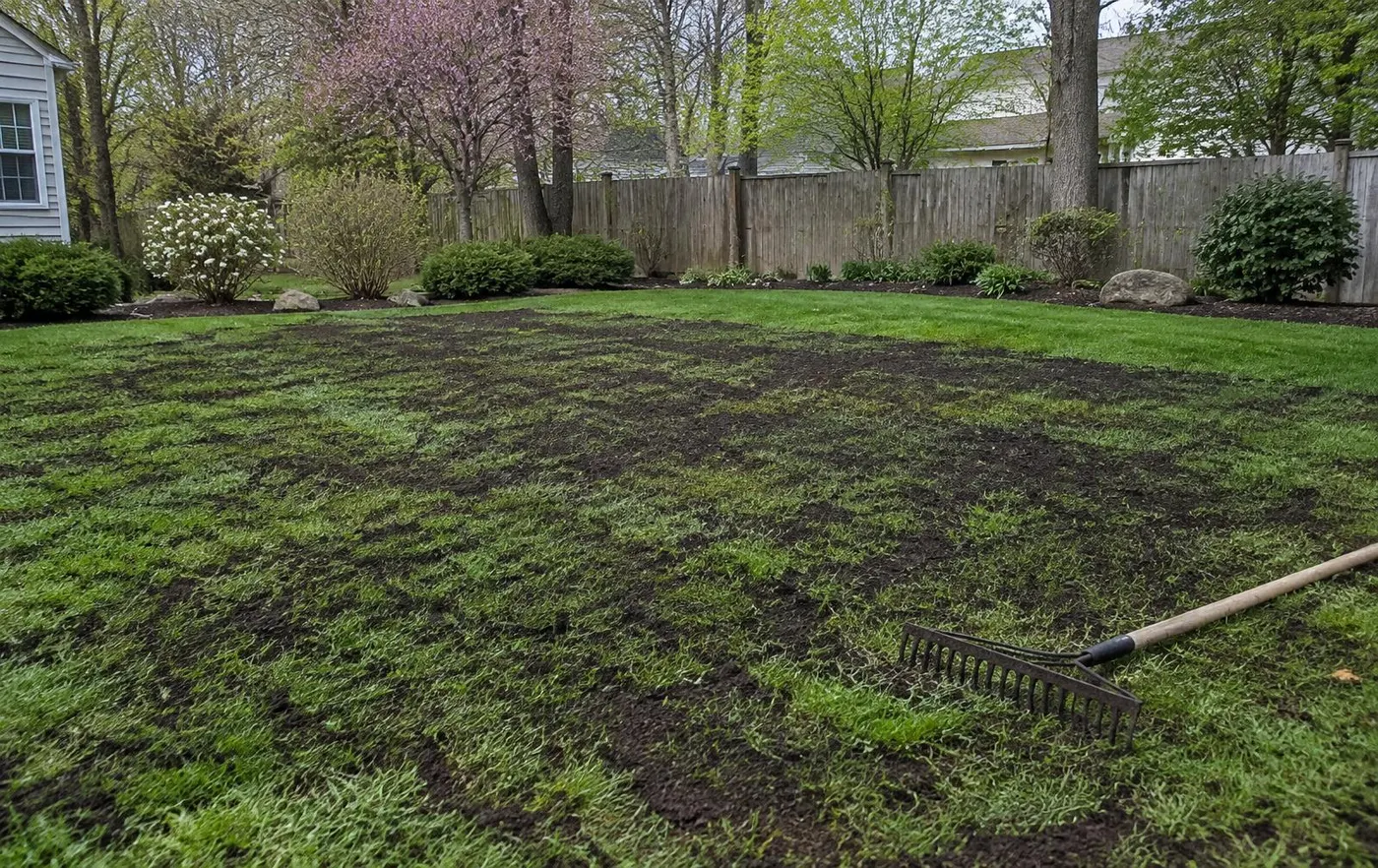
Not every lawn needs compost, and compost won't solve compaction, drainage or every soil problem on its own. It's a way to invest in the growing environment when spring is when you want to act.
Spring
Protect + feed + improve the growing environment where appropriate.
Fall
Repair + aerate + seed + rebuild.
Does Every Lawn Need to Be Aerated Every Year?
No. Frequency should reflect the condition of the lawn and soil. Lawns with heavier traffic, compaction or recurring thinning may benefit more often. A healthy lawn growing in favorable soil may not need the same renovation intensity. We'd rather evaluate the lawn than sell aeration as an automatic requirement.
Related Services
Local Lawn Care in Northern New Jersey
Keep Learning
Aeration & Overseeding Questions
When is the best time to aerate a lawn in New Jersey?
For most established cool-season lawns in Northern New Jersey, late summer into early fall is the best time. Warm soil, moderating temperatures and a long establishment period before the next summer give aeration and overseeding the best opportunity to succeed. Exact timing depends on weather and site conditions.
Should I aerate and overseed my lawn in spring?
GreenStripe generally doesn't recommend routine spring aeration and overseeding for established lawns. Seedlings have a short runway before summer stress, and spring crabgrass prevention can conflict with seeding. Repairing bare or severely damaged turf in spring may still make sense in some situations and should be evaluated individually.
Why does GreenStripe prefer fall seeding?
Fall aligns warm soil with cooler air, declining summer weed pressure and active cool-season turf growth—and it gives young grass the longest possible time to develop before its first summer.
Can I aerate without overseeding?
Yes. Aeration alone can help relieve some compaction and improve air and water movement. If the turf is thin, pairing aeration with overseeding usually makes better use of the openings it creates.
Does every lawn need aeration every year?
No. Lawns with heavy traffic, compaction or recurring thinning may benefit more often, while a healthy lawn in favorable soil may not need it annually. Frequency should reflect the lawn's condition.
Does aeration fix compacted soil?
Aeration can relieve some compaction near the surface, but it isn't a permanent fix for severely compacted or structurally poor soil. Those situations may need a more comprehensive soil-building approach.
Should I add compost when I aerate and overseed?
It can help on depleted or construction-disturbed soils as part of a broader renovation, but not every lawn needs it. A soil evaluation helps determine whether compost is a worthwhile addition.
How soon after aeration and overseeding can I mow?
Generally, wait until new seedlings are established and reach normal mowing height, then mow with a sharp blade when the turf is dry. Timing varies with weather, seed type and watering.
Can I use crabgrass pre-emergent and grass seed at the same time?
Often not. Many pre-emergent products also interfere with desirable grass seedlings. Product labels govern use and reseeding intervals, so always follow the specific label.