

All winter long, your dog heads to the same spot by the back door.
Fast forward to spring…and that little corner of the yard is the first place to turn yellow.
If it feels like your dog is “killing” the lawn one bathroom break at a time, you’re not imagining it—but the story is a little more nuanced than that.
The good news: you don’t have to choose between a happy dog and a healthy lawn. You just need to understand what’s happening in that winter potty zone, and how to set your yard up to bounce back.
What’s Really Happening in That Spot?
Dog urine is basically a very concentrated “liquid fertilizer” with extra salt mixed in.
It contains nitrogen, which in small amounts can actually feed grass, and salts, which can dry out and burn plant tissue. When your dog uses the same small area over and over, especially when the grass is dormant, that combination overwhelms the turf. The soil can’t dilute and process everything fast enough, and the plants can’t grow through the stress the way they might in active growing season.
In winter, grass is resting. It isn’t actively growing or repairing itself. So each bathroom break quietly stacks more stress on the same blades and roots. By the time spring arrives, the damage that’s been building all season shows up as burned or bare spots.
Why Winter Makes Pet Spots Worse
Dog spots can happen any time of year, but winter tends to magnify them.
When the yard is snowy or icy, most dogs prefer the one place that’s easiest to reach: the cleared path off the patio, a shoveled patch near the back door, or a small section under an overhang where the ground is exposed. That means every single bathroom break is concentrated in just a few square feet.
The ground itself also behaves differently in winter. Sometimes it’s frozen solid, so urine sits on top instead of soaking in and dispersing. Other times, the soil is saturated or partially thawed, so liquid runs in narrow streaks and pools in low spots. The result is the same: instead of spreading out, everything accumulates in tight zones where the grass and soil take repeated hits.
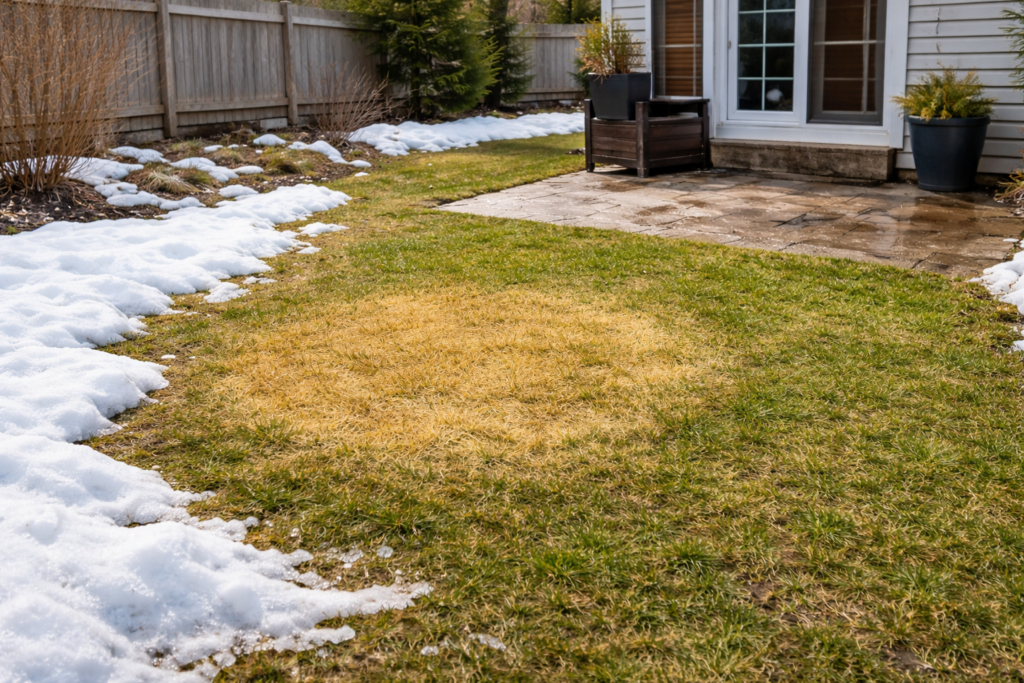
You usually don’t see the full impact right away. Snow hides the early color change, and dormant grass doesn’t respond quickly. Once everything melts and the lawn “wakes up,” the pattern of your dog’s winter routine suddenly appears in yellow or bare circles.
What Winter Pet Spots Look Like in Spring
When the snow finally goes and the lawn starts to green up, dog spots tend to stand out.
You might notice:
- Bright yellow or straw-colored circles where the grass looks burned
- Completely bare patches with soil showing in the middle and darker-green grass around the edge
- Spots that feel a bit muddy or compacted from repeated traffic in the same small area
Often, those marks line up perfectly with your dog’s favorite route or “quick exit” corner.
What You Can Do Now to Reduce Damage
You don’t have to wait until spring to start helping your lawn. A few small changes to winter habits can make those spots less severe.
Create a “Bathroom Zone” If You Can
One of the best long-term solutions is to give your dog a dedicated area that isn’t lawn. That could be a small gravel or pea-stone run near the door, a mulched corner, or even a strip of hardscape. Training your dog to use that spot takes consistency, but even partial success takes pressure off the main turf.
Gently Rotate the Area
If a dedicated zone isn’t realistic, you can still avoid hammering the same square of lawn all winter. Clearing a slightly wider path, guiding your dog a few steps further out, or using a leash to redirect them to a less visible patch can help spread out the impact. The goal isn’t perfection; it’s just avoiding putting 100% of the stress on one tiny circle.
Rinse on Warmer Days (When Possible)
On milder winter days when the ground isn’t frozen like concrete, you can bring a small watering can outside and lightly rinse the most heavily used spot right after your dog goes. You’re not trying to flood the yard—just to dilute the strongest concentrations so they don’t sit right at the surface. You won’t do this every time, and that’s okay; even occasional rinsing can make a difference in the worst areas.
How to Repair Winter Pet Damage in Spring
Once the lawn has thawed and dried enough to work, you can start repairing the most damaged spots.
Step 1: Check What’s Truly Dead
Gently tug on the yellowed grass in your dog’s favorite area. If it pulls up easily, roots and all, that turf is likely dead and needs to be replaced. If it stays anchored, the grass may just be burned at the tips and could recover with time, water, and proper care. This quick test tells you where you need full patch repair versus simple support.
Step 2: Clean and Loosen the Area
In spots that clearly need work:
- Rake lightly to remove dead grass and thatch.
- Use a hand rake or cultivator to loosen the top inch of soil so roots, air, and water can move through again.
- When temperatures allow, water the area deeply a few times to help flush some of the excess salts down into the soil profile.
You’re essentially resetting that small patch of ground so new grass has a better chance.
Step 3: Add Compost and Seed
Once the soil is loosened and rinsed, add a thin layer of compost or quality topsoil to improve structure and buffer any remaining salts. Then overseed or patch-seed with a grass blend that matches your existing lawn (or one that’s even better adapted to your site). Keep the area consistently moist while the seedlings establish, and try to minimize foot and paw traffic there until the new grass is rooted in.
Making Your Lawn More Dog-Friendly Long-Term
You’ll probably always see some impact from dog urine—that’s normal in a pet household. But you can make your lawn more forgiving.
Healthy soil and deeper-rooted grass varieties are more resilient than tired, compacted turf. When the soil has good structure and organic matter, it’s better at handling stress from salts, extra nitrogen, and foot traffic. A dense, vigorous lawn also fills in small scars faster, so isolated spots don’t turn into long-term bare patches or weed magnets.
Just as important is your mindset. A “dog-friendly lawn” does not mean every square inch is always perfect. A realistic goal is a yard that looks good overall, has a few small, manageable spots where the dog tends to go, and a simple, repeatable repair routine every spring. That’s much more achievable—and much less stressful—than aiming for golf-course perfection with a real family and real pets.
Pet-Friendly Lawns Are Our Thing
At GreenStripe, we know your lawn isn’t just for looking at—it’s for living on, especially if you share it with dogs.
Our programs are designed to:
- Build healthier, more resilient turf that can better handle pet traffic and winter stress
- Improve soil quality and organic matter, so burned spots recover more quickly
- Support spring repair with the right combination of seed, compost, and organic fertilization
If your dog’s favorite corner has turned into a yearly yellow patch, we can help you get ahead of it instead of fighting the same battle every spring.
Reach out to GreenStripe to talk about a pet-friendly lawn care plan that works for both your grass and your four-legged family members.