
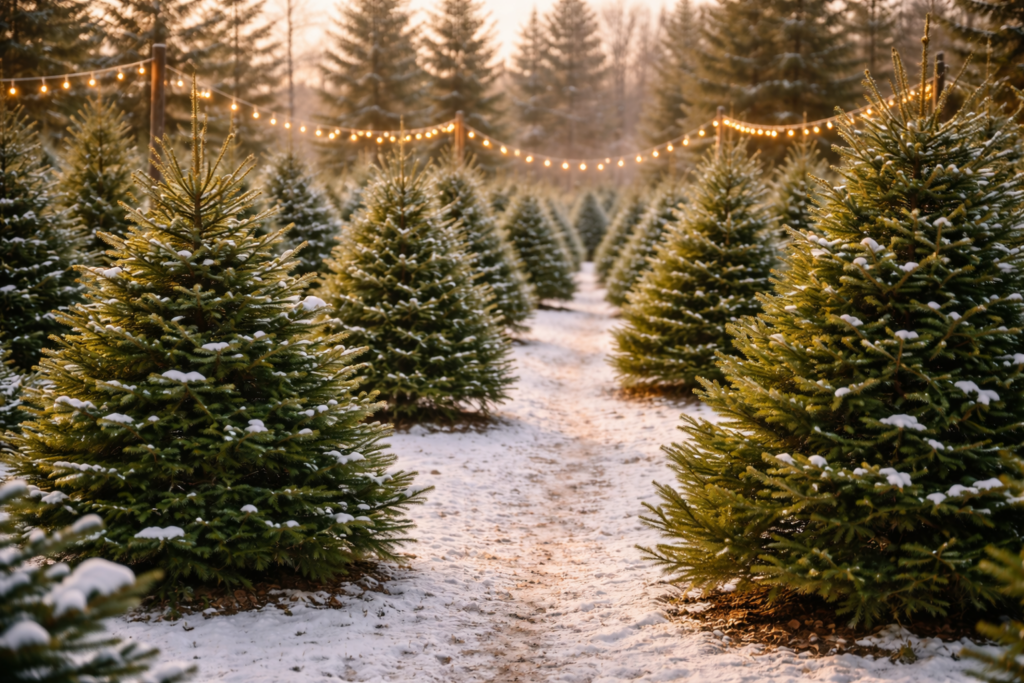
There’s nothing quite like the moment the tree goes up.
The lights click on, the room smells like pine, and suddenly it feels like the holidays.
But how did that tree actually get from a field to your living room? And what’s the story behind this whole Christmas tree tradition anyway?
Let’s take a little journey—from forest to family room.
A Brief History of the Christmas Tree
Long before anyone was stringing LED lights, people were bringing evergreens indoors as a symbol of life in the darkest part of the year.
Ancient Traditions
In many ancient cultures, evergreen branches stood for renewal and protection during winter. People decorated their homes with greenery around the solstice, believing it could ward off bad luck and remind them that spring would eventually return.
From Europe to North America
The custom of decorating a whole tree, rather than just using branches, is usually traced back to German-speaking regions in Europe. Families brought small evergreens inside and adorned them with apples, nuts, candles, and homemade ornaments.
As German immigrants came to North America, they brought the tradition with them. By the mid–1800s, Christmas trees really took off in the U.S., especially after an illustration of Queen Victoria and Prince Albert standing around a decorated tree made the idea look fashionable and “official.”
Tree Farms Change the Story
Today, real Christmas trees don’t usually come from wild forests. They’re grown on dedicated tree farms as an agricultural crop. These farms:
Plant seedlings every year
Shape and prune trees over time
Harvest them once they reach a good “living room” size
It can take 8–12 years for a tiny seedling to become the tree you bring home. For every tree cut, farmers typically plant several more, so the cycle continues.
Where Your Christmas Tree Actually Comes From
Most real Christmas trees in the U.S. are grown on family-owned farms located in cooler regions with good rainfall and well-draining soil. From the road, they look like rolling green fields, but each row is carefully planned.
A few things that might surprise you:
Your tree has likely been on that farm for close to a decade.
Many farms grow several species at once so they can offer different looks and scents.
“Local” trees can come from a neighboring town—or from a few states away, depending on what grows best where you live.
Before you ever see it on a lot, your tree has already had a long life outdoors.
Different Christmas Tree Types (and How to Pick One)
Walk onto a tree lot and you’ll see a lineup of names: Fraser fir, Balsam fir, Douglas fir, Blue spruce. They’re all evergreens, but they’re not all the same.
Fraser Fir
Fraser firs are a classic Christmas favorite. They have soft, dark green needles with a silvery underside and strong branches that can hold heavier ornaments. They’re known for excellent needle retention and that “perfect tree” shape a lot of people picture when they think of a Christmas tree.
Balsam Fir
Balsam firs bring the fragrance. Their flat, deep green needles give off a strong, traditional “Christmas tree” smell. The branches are a bit softer, which makes them wonderful for lighter ornaments and garlands.
Douglas Fir
Douglas firs tend to look very full and lush. They have soft, flexible needles and a slightly more delicate branch structure. Their fragrance is lighter and sweeter, which some people love if they prefer something less intense.
Blue Spruce
Blue spruces are the show-offs of the tree lot. Their blue-green color can be stunning, and their branches are strong enough for heavier decorations. The tradeoff? The needles are quite sharp. Beautiful, but not always the best choice for families with small children who like to “rearrange” ornaments.
Quick Freshness Check
No matter which type you choose, a few basic checks can help you find a healthy, long-lasting tree:
Color: Look for rich green or blue-green, not dull or brown-tipped.
Needles: Gently pull a branch through your hand. A few needles falling is normal, but if it sheds heavily, keep looking.
Trunk: The base should look freshly cut, or be recut at the lot, so the tree can drink water properly once you get it home.
How Tree Farms Prepare for the Holidays
Your tree’s holiday story involves a lot more than just “cut and ship.”
On the farm, growers are working year-round:
Shaping and pruning trees so they grow into that full, conical silhouette.
Inspecting and tagging trees by size and quality so lots can offer a good mix.
Timing the harvest so trees are cut as close to the season as practical for maximum freshness.
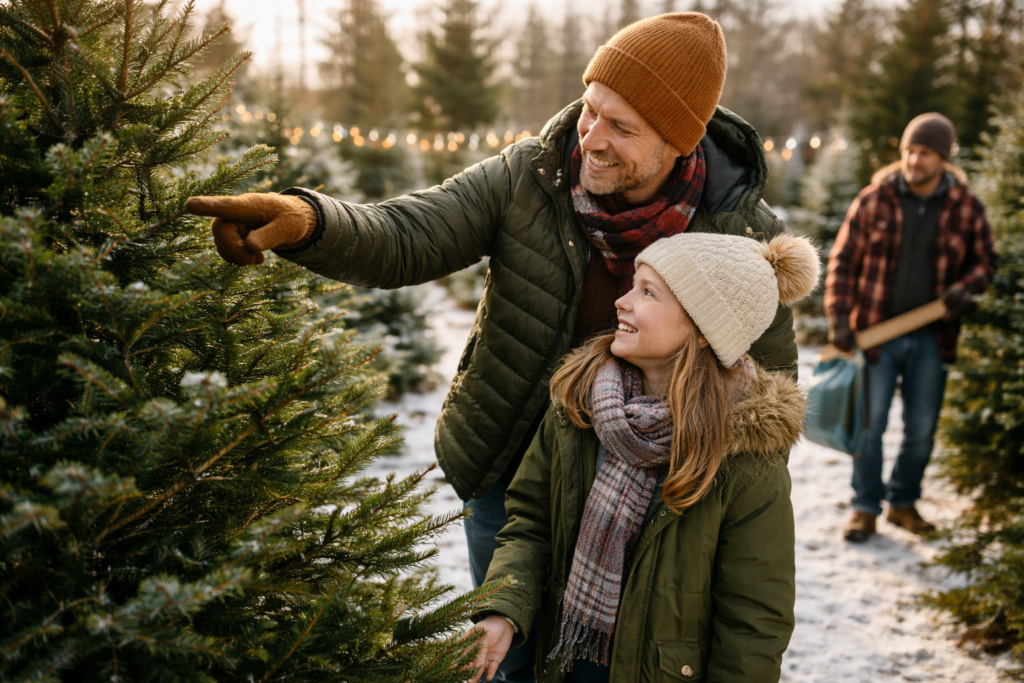
Loading and transporting trees to retail lots, garden centers, or choose-and-cut operations where families wander the fields themselves.
Once the trees arrive at a lot or shop, staff unwrap, stand, and often trim the bases. Many use mechanical shakers to knock off loose needles and debris, then wrap trees in netting so they’re easier to tie onto cars and carry through doorways. What looks like a simple row of trees and a few strings of lights is actually the final step in a pretty coordinated operation.
What Your Tree Has in Common With Your Lawn
Your Christmas tree spent years in a field, relying on healthy soil, the right amount of water, and careful pruning to grow strong and dense. Your lawn is doing the same thing on a smaller scale, every single season.
The big difference? Your yard doesn’t get a “fresh start” every December. It lives in the same soil year after year, dealing with weather, foot traffic, salt, and stress. Just like the farms invest in soil and long-term care to grow beautiful trees, your lawn needs ongoing, thoughtful care if you want it to bounce back after winter and look its best in spring.
But What About Bugs?
This is one of the most common worries:
“Am I bringing a bunch of bugs into my house?”
It’s true that real trees can host small critters—things like tiny spiders, aphids, mites, or the occasional egg case stuck to a branch. They’ve been living outdoors in cold, rough conditions. Once inside, the warm, dry air usually isn’t kind to them, and they don’t last long.
More importantly, these are not the same as indoor pests that chew through wood or infest kitchens. They aren’t trying to colonize your home; they’re accidental passengers. A quick inspection and a good shake (often done at the lot, and then again at home) is usually all it takes to keep things under control.
If you do spot a bug or egg case after the tree is up, just remove it and either take it outside or toss it. No sprays, no drama required.
Taking Care of Your Tree Once It’s Home
After all those years on the farm and the trip to your house, your tree needs a little care to look its best and stay safe.
Help It Drink
As soon as you get it home, give the trunk a fresh cut if it’s been more than a few hours since the last one. Removing a thin slice (about ½ inch) at the base helps the tree take up water again. Place it in a sturdy stand with a good-sized water reservoir and fill it right away.
For the first week, check the water level daily—sometimes more than once a day. A fresh tree can drink a surprising amount. Never let the water level drop below the bottom of the trunk, or the cut can seal over and the tree will dry out more quickly.
Choose the Right Spot
Where you put the tree matters. Aim for a location away from direct heat: not right next to a radiator, fireplace, or blasting heat vent. Too much heat accelerates drying, leads to more needles on the floor, and increases fire risk. Give the tree enough space so branches aren’t being crushed against walls or furniture.
After the Holidays: Where Does the Tree Go Next?
Once the ornaments are packed away and the lights are coiled, your tree still has one more chapter.
Many towns offer recycling or mulching programs. Trees are collected and chipped into mulch, used on trails, or even placed along shorelines and hillsides for erosion control. Some communities have central drop-off points, while others pick trees up curbside on specific days.
If it’s allowed where you live, you can also reuse parts of the tree at home. Some people place the bare tree outside as a temporary shelter for birds through the winter, then cut it up later for brush piles, compost, or chipping.
Compared to artificial trees, which eventually end up in landfills, real trees return to the earth naturally. From seedling to mulch, they’re part of a renewable cycle.
From Tree Farms to Turf—We Take Care of What Grows
Your Christmas tree is a once-a-year guest, but your lawn is with you in every season.
The same things that helped that tree grow strong on the farm—healthy soil, the right moisture, and protection from stress—are exactly what your lawn needs to handle winter and come back thick and green in spring. That’s where GreenStripe comes in.
We focus on:
Building healthy, living soil so grass can thrive naturally
Using earth-conscious, organic-based treatments instead of harsh chemicals
Preparing your lawn for winter stress and helping it recover in spring with aeration, overseeding, and smart fertilization
If you’re ready to give the ground outside your window the same kind of care and attention you give your tree in the living room, get in touch with GreenStripe to talk about a winter-to-spring lawn care plan.