The snow finally melts. You’re ready for that first glimpse of green…
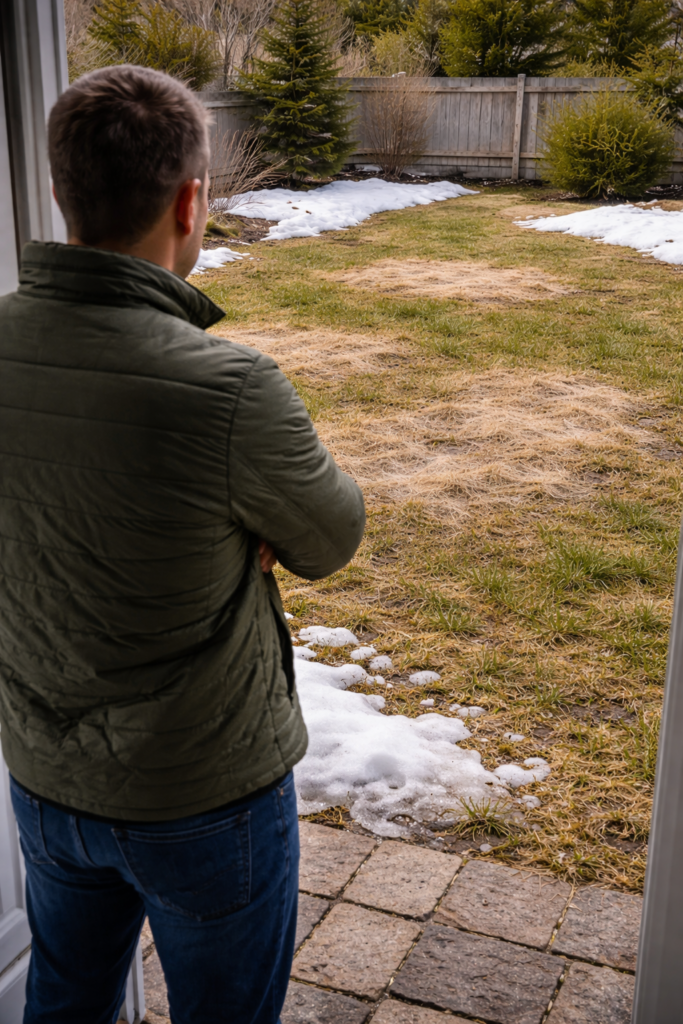
…and instead you see matted, discolored patches that look like something got spilled on your lawn and never cleaned up.
If you’ve ever stepped outside in early spring and thought, “What on earth happened to my grass?” you were probably looking at snow mold.
The good news: it usually looks worse than it is. Let’s walk through what snow mold is, why it shows up, and what you should (and shouldn’t) do about it.
What Is Snow Mold?
Snow mold is a fungal disease that shows up in cool, wet conditions—most often right after snow has been sitting on the lawn for a while. There are two main types: gray snow mold and pink snow mold. You don’t need to identify them perfectly to handle the problem, but it helps to know they exist.
Both types love the same conditions: cool temperatures, extended moisture, and matted grass that doesn’t dry out quickly. A layer of snow acts like a blanket, keeping everything underneath cool, damp, and still. That’s basically a spa day for these fungi.
What Snow Mold Looks Like
You usually notice snow mold as the snow disappears or shortly afterward. The lawn around it might be starting to green up, which makes the damaged areas stand out.
Most homeowners see some combination of:
- Matted, crusty patches where the grass looks “glued down”
- Discolored areas that are gray, whitish, or tan, sometimes with a fuzzy or web-like film
- In more severe cases, a faint pinkish or salmon tint around the edges of the patch
It’s easy to assume the whole thing is dead. Often, that’s not actually the case.
Why Your Lawn Gets Snow Mold
Snow mold isn’t random bad luck—it usually shows up when several factors line up at once.
Long-lasting snow cover is a big one. When snow falls on unfrozen, slightly damp ground and then sticks around for weeks, the grass underneath stays cool and wet with very little air movement. If that snow landed on a lawn that still had a layer of leaves, long grass, or leftover debris, you’ve essentially created a thick, wet mat at the surface. That’s exactly the kind of environment snow mold prefers.
Late-season lawn habits also play a role. When grass goes into winter a little too long or a little too lush—because it wasn’t mowed down for the final cut, or because it got a heavy dose of fast-release fertilizer right at the end of the season—it tends to mat more under snow. Tender, dense top growth holds moisture and gives fungi more material to colonize.
Put those things together—thick, slightly neglected turf plus weeks of cool, wet cover—and snow mold starts to make sense.
How Serious Is Snow Mold?
It depends on how deep the damage goes.
In many cases, especially with gray snow mold, the fungus mostly affects the leaf blades at the surface. The crowns and roots (the parts that matter most for regrowth) are still alive. Once the lawn dries, warms, and starts actively growing, a lot of those ugly patches improve on their own.
More severe infections—often associated with pink snow mold or very long, heavy snow cover—can damage the crowns as well. Those areas stay thin or brown long after the rest of the lawn greens up, and they may need reseeding or patch repair.
The key is not to panic on day one. Give the lawn some time to wake up before deciding what’s truly dead.
What to Do When You First See Snow Mold
Right after the snow disappears, the lawn is usually saturated and soft. This is not the moment for aggressive raking or lots of foot traffic.
Start by letting things dry out a bit. Even a few days of milder weather can firm up the surface so you’re not compacting the soil every time you step onto the lawn. Once it no longer feels squishy, you can move to gentle cleanup.
At that point, lightly rake or “fluff” the affected areas. Use a leaf rake or even your hands to lift the matted grass and break up any crusty film on top. You’re not trying to scrape everything off; you’re simply opening the canopy so air and sunlight can reach it again. For mild to moderate gray snow mold, this alone—plus time and normal spring growth—often leads to surprising recovery.
When Do You Need to Reseed?
After a few weeks of warmer temperatures and some regular mowing, the difference between recovering turf and dead turf becomes clearer.
It’s time to reseed if you see:
- Bare soil where the grass has completely disappeared
- Patches that stay brown or very thin while the rest of the lawn thickens up
- Grass in those spots that pulls up easily, roots and all
In those areas, treat it like any other small repair. Rake out dead material, loosen the top layer of soil, and, if it’s compacted or tired, add a light layer of compost or quality topsoil. Then overseed with a grass mix that matches (or improves) your existing lawn, and keep the area evenly moist while the new seedlings establish.
How to Reduce Snow Mold Next Winter
You can’t control how much snow you get, but you can control how your lawn goes into winter.
A few simple habits go a long way:
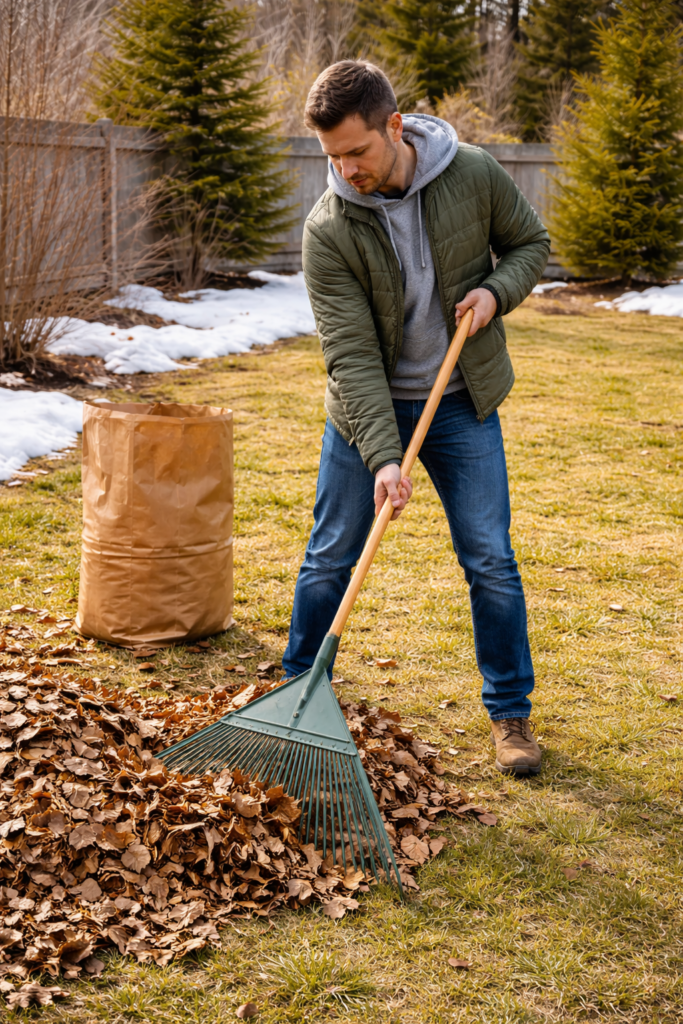
- Clean up leaves and debris. Try not to leave thick, wet piles of leaves on the lawn heading into the first snow. A little leaf litter is fine; heavy mats are what cause trouble.
- Finish mowing at a reasonable height. Going into winter with slightly shorter grass (without scalping) reduces the amount of material that can mat down.
- Skip the big late-season nitrogen blast. Well-timed, balanced fall fertilization is great. A heavy “green it up one last time” application right before winter just creates soft growth and more fuel for snow mold.
- Support soil health and drainage. Core aeration, compost topdressing, and organic-based programs improve structure so water doesn’t linger at the surface as long.
You’re aiming for a lawn that heads into winter neat, healthy, and not smothered.
Spring Recovery and Smarter Winters
Snow mold is one of those reminders that your lawn is a living system, not just a green rug you roll out when it’s warm.
At GreenStripe, we look at both sides of the snow mold story:
On the spring side, we help gently open up matted areas, repair thin patches with the right seed and soil amendments, and feed the lawn with organic-based products that support root growth and soil life. On the fall side, we adjust mowing, fertilization, and cleanup so your lawn goes into winter strong—without setting up the perfect conditions for snow mold to thrive.
If you’ve walked out after a melt and found those weird, crusty patches staring back at you, you’re not alone. Reach out to GreenStripe to talk about a lawn care plan that includes snow mold recovery now and prevention before next winter.