
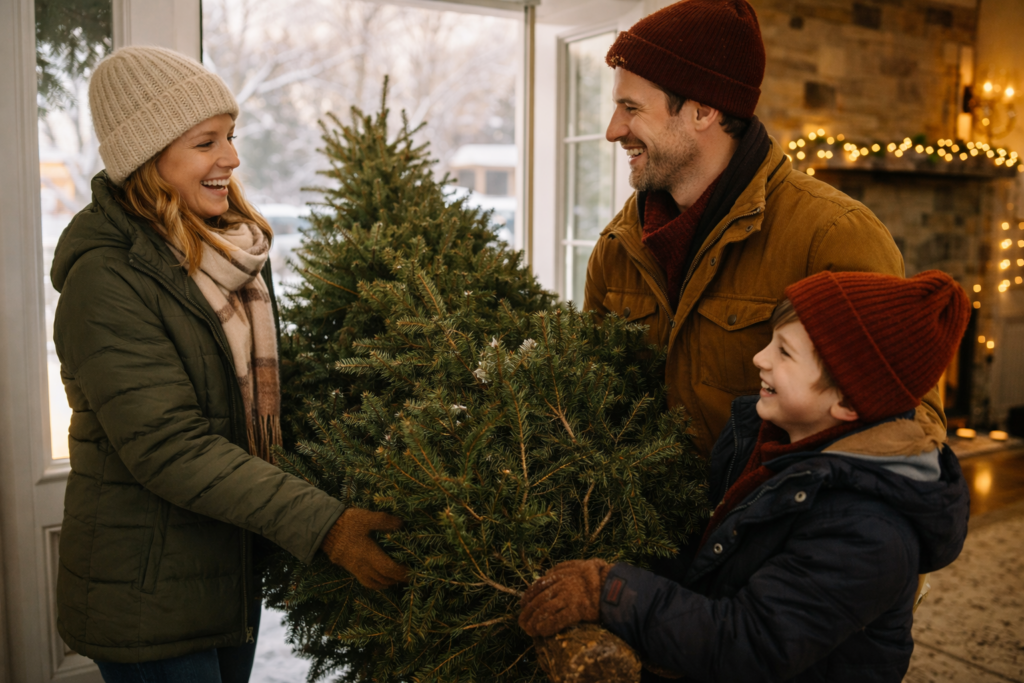
A real Christmas tree smells amazing, looks beautiful…
…and also came straight from a field full of soil, critters, and weather.
It’s completely normal to wonder if you’re bringing bugs into your house, whether a tree can cause mold or allergies, and if there’s anything you should do before you set it up.
The good news: with a few simple steps, you can enjoy a real tree without turning your living room into a wildlife experiment.
Let’s walk through what you might find on a tree, how to prevent issues before you bring it inside, and what to do if you spot bugs, mold, or a whole lot of mess.
Are Christmas Tree Bugs Really a Problem?
Short answer: usually not.
Common Hitchhikers
Real trees can have tiny hitchhikers, but they’re generally harmless and have no interest in becoming permanent roommates. Some of the more common visitors include:
Tiny spiders
Aphids
Mites
Small beetles
Occasional egg cases, like praying mantis cases
They’ve been living outside in cold conditions, and once they’re inside your warm, dry home, the environment isn’t ideal for them and they usually don’t survive long.
What These Bugs Don’t Do
Just as important is what they don’t do. Bugs that come in on a Christmas tree don’t typically travel through the house looking for new food sources, chew through your structure, or start a major infestation. Most of the time, they’re just accidental passengers. Still, nobody wants to see surprise insects on their ornaments, so some prevention is worth it.
Step One: Choose a Clean, Healthy Tree
Good bug control starts at the tree lot.
When you’re picking a tree, take your time and give it a quick inspection. Walk around it and look along the trunk, inner branches, and needles for anything that seems off—obvious egg masses, large webs, clusters of insects, or needles that look moldy or dusty instead of fresh and green. If you see a lot of visible pests or strange growths, it’s perfectly fine to move on and choose a different tree.
If the lot has a mechanical tree shaker, ask them to use it. Shaking helps knock off loose needles, bits of bark, and many of the small bugs and egg cases that might be clinging to the branches. If a shaker isn’t available, plan to do your own “shake-out” at home before the tree ever crosses the threshold.
Step Two: De-Bug Your Tree Before It Comes Inside
Think of this as your tree’s check-in process.
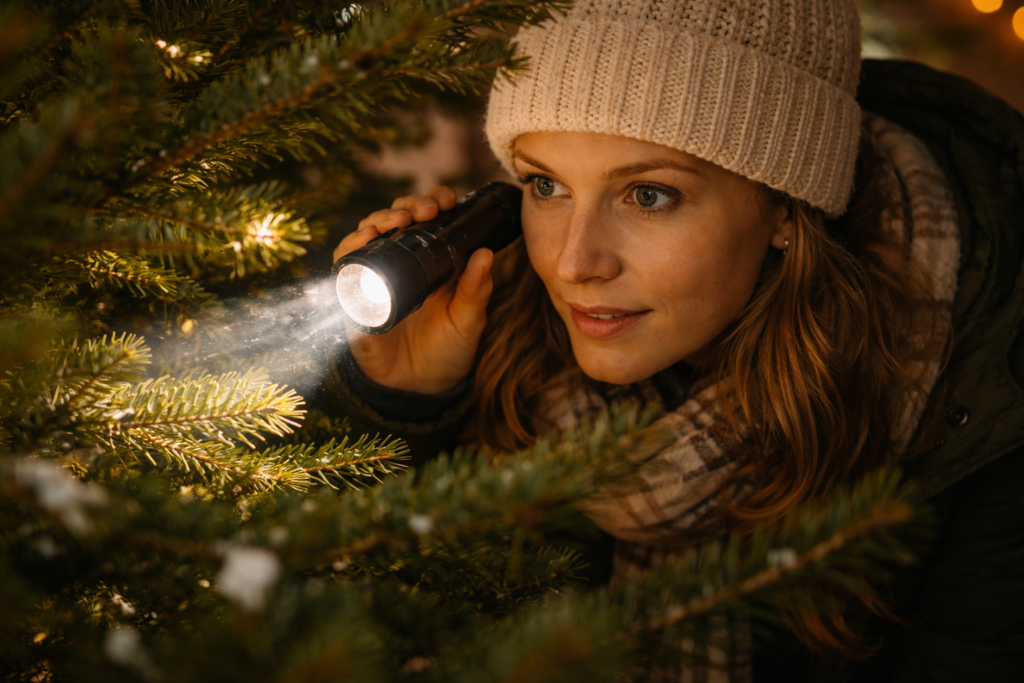
Once you’re home, keep the tree outside or in the garage at first. Stand it upright and give it a firm but controlled shake to knock off loose debris and dislodge any lingering insects. You may see needles, bark, and a few tiny critters fall off—that’s exactly what you want happening outside, not on your living room floor.
After shaking, do a visual inspection with the tree still upright. Look along the trunk and larger branches, peeking into the interior of the tree, not just the outer tips. If you see a large egg mass—something that looks like a foamy blob or a capsule stuck to a branch—clip off that small section and take it to the trash or outside far away from the house.
If the weather cooperates and you have a spot where the tree can dry, you can even give it a gentle rinse with the hose and let it drip-dry in the garage or a covered area. This isn’t required, but it can help knock off dust, pollen, and a few extra hitchhikers. Just make sure the tree has time to dry so you’re not bringing in a soaking-wet tree that could raise humidity and mold risk indoors.
Bugs vs. Indoor Chemicals: What Not to Do
When people get nervous about insects, the instinct is often to reach for a spray can. With a Christmas tree, that’s not the route you want to take.
Indoor insecticides, bug bombs, and harsh cleaners aren’t meant to be used on a big, porous piece of plant material sitting in the middle of your living space. In a warm room, chemicals can off-gas and affect indoor air quality, kids, and pets. Many products are not labeled for use on trees or near lights and open flame, and they can create more risk than the bugs ever would.
Stick with mechanical methods instead: shaking, inspecting, clipping off egg cases, and vacuuming up stray insects if you see them. It’s safer for you and usually more than enough.
Christmas Trees, Mold, and Allergies
Sometimes the issue isn’t bugs at all—it’s mold spores or allergies.
Why Trees Can Trigger Reactions
Real trees come from damp outdoor environments and soils rich with fungi, bacteria, and pollen. When you bring a tree indoors, any mold spores already on the bark and needles hitch a ride too. Once the tree is set up in a warm, humid room and you’re keeping water in the stand, you’ve created a small microclimate around the base that can encourage additional mold growth.
Not everyone reacts the same way. Some people don’t notice anything. Others might experience sneezing, a stuffy nose, itchy eyes, or a musty smell around the tree area.
How to Cut Down on Mold and Mustiness
To minimize this, you can rinse and dry the tree outdoors before bringing it in, clean up spills around the stand quickly, and vacuum around the tree regularly to pick up needles, dust, and debris. If someone in the home has significant allergies or asthma, you may want to shorten the amount of time the tree is up or choose a room where they spend less time.
Once the Tree Is Inside: Keeping Critters & Clutter Under Control
Now the cozy part: lights, ornaments, cocoa. You’re not done, but your job is easier.
Set the Tree Up Smart
- Place the tree somewhere away from heat sources like vents, fireplaces, and radiators. This reduces drying and needle drop.
- Use a sturdy, leak-free stand so spilled water doesn’t create damp spots that invite mold.
Keep an Eye Out (Without Obsessing)
For the first few days, casually keep an eye out. If you see a small bug, you don’t need to panic—just remove it with a tissue, release it outside or throw it away, and move on. If you spot a small egg case you missed, clip that twig and take it out of the house. Treat stray bugs the same way you would a random spider in any other room, not as a sign of a house-wide infestation.
Manage Needles & Mess
Real trees will naturally shed some needles:
- Vacuum instead of sweeping, so you’re picking up dust and fine debris as well.
- Avoid letting needles pile up around electrical cords and outlets.
The cleaner the area, the less chance you’ll worry about bugs, mold, or “something” lurking in the needles.
When Is It Time to Remove the Tree?
Even with great care, a real tree has an indoor expiration date.
Signs it’s time to say goodbye:
- Branches are very brittle
- Needles fall off in large amounts when you touch the tree
- The tree has been up several weeks and the water level hasn’t changed (it’s no longer drinking)
- You smell a musty, unpleasant odor around the tree
At that point:
- Unplug and remove lights and ornaments
- Lay down a sheet or tarp to catch loose needles
- Carry it outside and look into recycling or mulching options in your area
Pet-Safe, People-Safe Pest Care
If you’ve taken all the right steps and still feel like the bugs are winning, that’s where we come in.
While we’d never tell you to spray chemicals all over your living room tree, we can help you:
- Reduce tick, flea, and mosquito pressure in your outdoor spaces
- Use earth-conscious products and integrated pest management (IPM) strategies
- Keep your lawn safer for kids, pets, and holiday guests year-round
When the decorations are packed away and you’re thinking about next season outside, reach out to GreenStripe to talk about organic, people-safe pest control and lawn care options.